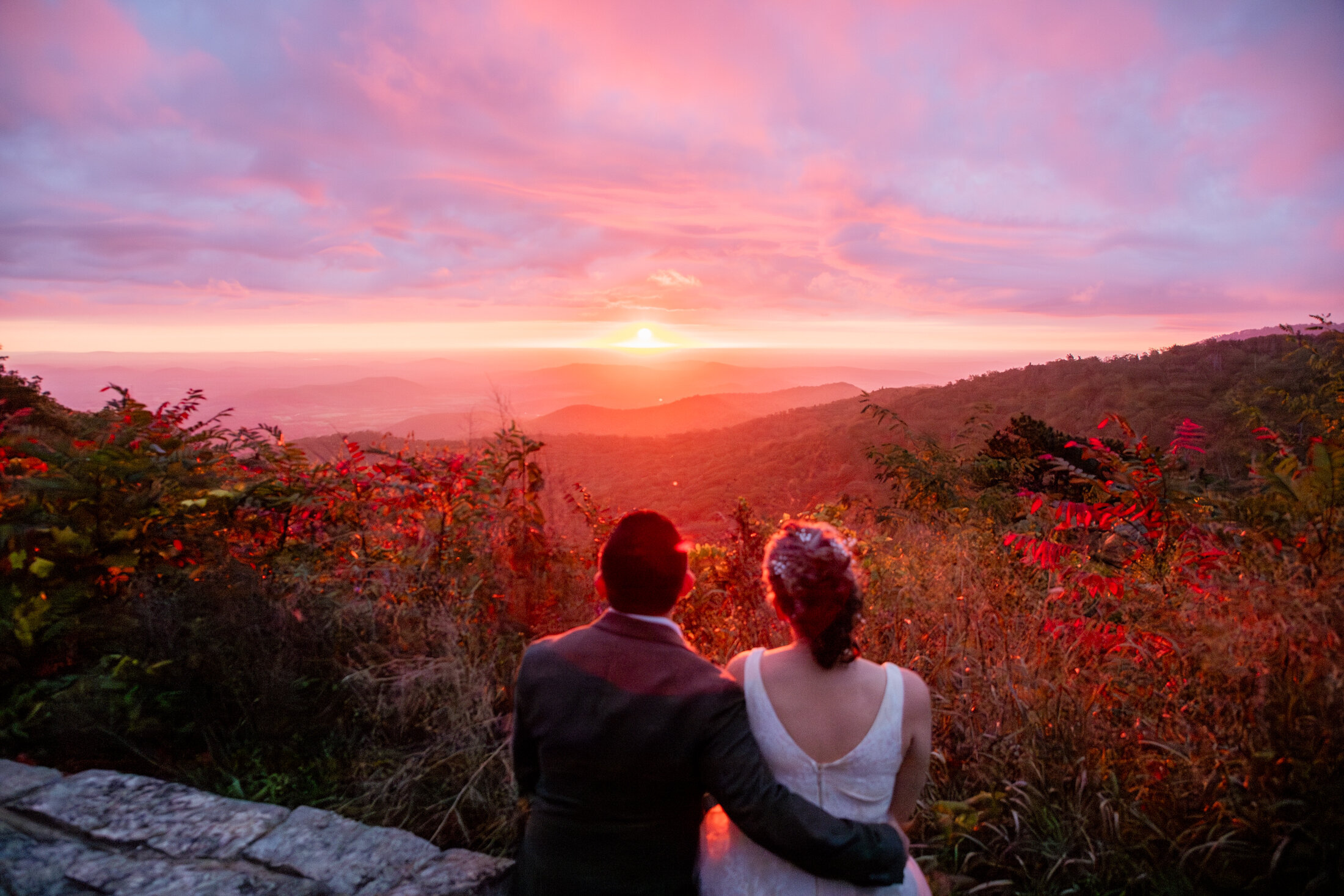
The Ultimate Shenandoah National Park Elopement Guide
Everything to know about eloping in Shenandoah National Park — locations, permit process, best seasons, sunrise vs sunset, and logistics.
Shenandoah National Park is one of the most beautiful places in the country to elope — and one of the most popular spots in Virginia for couples who want a mountain ceremony.
If you’re thinking about eloping in Shenandoah, this guide covers the essentials: locations, logistics, permits, the light, the seasons, and the things that aren’t obvious from a Google Maps glance.
Why Shenandoah is one of the best places to elope in the US
Shenandoah stretches 105 miles along the Blue Ridge Mountains in Virginia. Skyline Drive winds the entire length, sitting at roughly 3,000-4,000 feet elevation with overlooks every few miles. The park has over 500 miles of trails, including the Appalachian Trail, which follows the ridge.
Here’s what makes it extraordinary for elopements:
The views are genuinely spectacular. You’re standing on top of a mountain ridge with the Shenandoah Valley spreading below you in one direction and the Piedmont in the other.
It’s accessible. Unlike some dramatic landscapes that require serious backcountry experience, Shenandoah’s most stunning spots are reachable by most people. You can drive to within a short walk of ceremony-worthy views.
It’s close to everything. Shenandoah’s north entrance at Front Royal is 75 miles from Washington DC. Charlottesville is 20 miles from the south entrance. It draws couples from across the mid-Atlantic and beyond.
Every season is beautiful in a completely different way. More on each season below — Shenandoah is genuinely worth visiting any time of year.
Specific Shenandoah elopement locations
A closer look at each location — what the hike is like, what the light does, what to expect.
Stony Man Summit (Mile 41.7 on Skyline Drive)
The hike: About 1.6 miles round trip, with a gain of about 340 feet.
The view: Looking out over the Shenandoah Valley and the mountains beyond. On clear days, you can see for miles. This is a classic Blue Ridge panorama.
Best time: Morning, before the trail gets busy. Sunrise here is extraordinary if you’re willing to be on the trail before dawn.
Worth knowing: The last stretch of trail opens up onto dramatic rocky ledges that photograph beautifully. It feels earned even though it’s a short hike.
Crowds: Moderate. Popular enough to be busy on fall weekends, but manageable if you’re early.
Dark Hollow Falls (Mile 50.7 on Skyline Drive)
The hike: 1.4 miles round trip, descending to the falls. (This means you hike down first and climb back up — something to keep in mind in your attire.) The trail is paved but steep in sections.
The view: A 70-foot tiered waterfall dropping through a forested gorge. Absolutely gorgeous, especially in spring when the water is running high.
Best time: Spring for maximum water flow. Any season works, but the falls can be reduced to a trickle in dry late summer.
Worth knowing: The sound is everywhere — water all around you, creating an immersive environment unlike any of the overlooks.
Crowds: The most-visited waterfall in Shenandoah. Go early or consider a weekday.
Big Meadows (Mile 51 on Skyline Drive)
The hike: Minimal — the meadow is accessible directly from the Byrd Visitor Center area.
The view: A wide, open meadow surrounded by forest, with mountain views in the distance. Very different from the ridgeline spots — more expansive and pastoral.
Best time: Sunrise, when the meadow is often filled with deer and mist. Also beautiful in late October when the surrounding trees are turning.
Worth knowing: The scale. Standing in the middle of Big Meadows at sunrise with fog in the treeline feels like being in a painting.
Crowds: The visitor center area can be busy. The meadow itself disperses people well — you can usually find a quiet corner.
Bearfence Mountain (Mile 56.4 on Skyline Drive)
The hike: About 1 mile round trip, with a rocky scramble to the summit. This one requires some climbing over boulders — nothing technical, but not suitable for delicate footwear.
The view: 360-degree panorama. This is one of the few spots in Shenandoah where you can see in all directions from the summit.
Best time: Morning or evening light. This summit is worth the effort at any time, but golden hour is special.
Worth knowing: Bearfence has a raw, exposed quality that some of the easier overlooks don’t have — it genuinely feels like you’ve gotten somewhere.
Crowds: Less crowded than Stony Man simply because the scramble filters people out. A good choice if you want more solitude.
Blackrock Summit (Mile 84.8 on Skyline Drive)
The hike: About 1 mile loop to the summit. The trail is rocky.
The view: Dramatic quartzite boulders that change color in different light — from grey to white to almost golden in the late afternoon. The views of the southern Shenandoah Valley are exceptional.
Best time: Late afternoon and sunset. The way the quartzite catches golden hour light is exceptional.
Worth knowing: It doesn’t look like anywhere else in the park. The rocks have a strange, moonscape quality in overcast light, and a warm amber glow at sunset.
Crowds: The south district of the park sees fewer visitors in general. Blackrock is popular but not overwhelming.
Quick Comparison: Best Shenandoah Ceremony Locations
| Location | Milepost | Distance | Difficulty | Best For | Best Season | Crowds | Permit Needed? |
|---|---|---|---|---|---|---|---|
| Stony Man Summit | 41.7 | 1.6mi RT | Moderate | Sunrise, panoramic views | Spring, Fall | Low-Moderate | No if you have under 15 people involved |
| Dark Hollow Falls | 50.7 | 1.4mi RT | Moderate | Waterfall ceremony | Spring, Summer | Moderate-High | No if you have under 15 people involved |
| Big Meadows | 51.0 | Flat | Easy | Wildflower ceremonies, fog | Spring, Fall | Moderate | No if you have under 15 people involved |
| Bearfence Mountain | 56.4 | 1.2mi RT | Moderate (scramble) | 360-degree views, adventurous couples | Summer, Fall | Low | No if you have under 15 people involved |
| Blackrock Summit | 84.8 | 1.0mi loop | Easy | Sunset, boulder fields | Fall, Summer | Low | No if you have under 15 people involved |
| Hawksbill Summit | 45.6 | 2.1mi RT | Moderate | Highest point in park | Summer, Fall | Low-Moderate | No if you have under 15 people involved |
| Compton Peak | 10.4 | 2.4mi RT | Moderate | Solitude, fewer crowds | Spring, Fall | Very Low | No if you have under 15 people involved |
| Limberlost Trail | 43.0 | 1.3mi loop | Easy (accessible) | Old-growth forest, accessible | Spring, Fall | Low | No if you have under 15 people involved |
| Jewell Hollow Overlook | 36.4 | Roadside | Easy | Golden hour, accessible ceremony | Fall, Summer | Low | No if you have under 15 people involved |
| Turk Mountain | 94.1 | 2.4mi RT | Moderate | True solitude, southern section | Spring, Fall | Very Low | No if you have under 15 people involved |
Shenandoah elopement permit requirements
No permit is required for ceremonies with 15 or fewer people involved. This covers the vast majority of elopements.
If your ceremony includes 16 or more people, a Special Use Permit is required from the National Park Service. The fee is $150.
What the application includes:
- Your desired ceremony date and time
- Exact location (specific trail or overlook)
- Estimated number of attendees (ceremony party + photographers + witnesses)
- A description of the ceremony
The permit isn’t complicated, but the details matter — especially the specific location, which the park uses to assign permit areas and avoid conflicts with other permit holders.
Things to know:
- The permit doesn’t include exclusive use of the location. Other park visitors may be present.
- You cannot set up structures or have small decorations.
- Always practice the principles of leave no trace.
Seasons in Shenandoah
Spring (March–May)
What it’s like: Variable. Early spring (March) can still feel like winter — cold, potentially snowy, occasionally dramatic. By April, the wildflowers are appearing and the waterfalls are running full from snowmelt. May brings the forest canopy fully into green.
Why it’s special: Wildflowers and waterfalls. The forest floor is carpeted in trillium, bluebells, and other spring ephemerals. Dark Hollow Falls in April is extraordinary.
What to expect: Weather can shift fast. Pack layers. Mud is a real consideration on some trails, but that makes it fun.
Crowds: Low to moderate. Much less crowded than fall.
Summer (June–August)
What it’s like: Warm days (70s-80s at elevation, cooler than the valley), lush green forest, afternoon thunderstorms that roll through regularly.
Why it’s special: Morning light. The park is quiet before 9am, the forest is intensely green, and the mist that sits in the valley creates a dreamy layered effect on overlook photos.
What to expect: Hazy days can reduce visibility at overlooks. Humidity is real. The afternoons can bring storms, so morning ceremonies make the most sense.
Crowds: Busy, especially on weekends. Weekdays and early mornings are much more manageable.
Fall (September–November)
What it’s like: This is Shenandoah’s most popular season, and with good reason. Peak foliage in October is extraordinary — reds, oranges, and golds rolling across the ridgelines as far as you can see.
Why it’s special: The color is indescribable. Standing on a Shenandoah overlook in mid-October with the whole valley on fire is something you have to experience in person.
What to expect: Crowds. This is peak season — park entrance lines on fall weekends can be long, popular overlooks fill up by mid-morning, and accommodation books months in advance. Weekdays and early mornings are highly recommended to avoid crowds.
Photographers book up fast for fall. If you’re considering a fall Shenandoah elopement, start planning 10-12 months out.
Winter (December–February)
What it’s like: Cold, quiet, and occasionally magical. Snow transforms the park into something completely different. Frost on the bare tree branches. Ice along waterfalls.
Why it’s special: The solitude. Winter Shenandoah is a completely different experience — you might have an overlook entirely to yourself. The light is lower and softer. The atmosphere is moody and beautiful.
What to expect: Skyline Drive can close for snow, ice, and high winds. Always check conditions. Some facilities are closed for the season. Dress warmly — seriously warmly.
Sunrise vs. sunset at Shenandoah: which should you choose?
Both are wonderful. A way to think about it:
Sunrise
- The park is quiet — often completely empty
- The light starts soft and golden, building gradually
- Mist is common, especially in the valley (magical for photos)
- You might share your ceremony with deer and absolutely nothing else
- Requires waking up very early (sunrise in October is around 7:15am, but you need to be on trail before that)
- Good for: couples who are morning people, anyone wanting true solitude, fall and spring particularly
Sunset
- Warm, directional golden light
- The valley below takes on a golden haze
- You have the whole day to get ready, relax, and not set an alarm for 4am
- More people in the park, but most leave after golden hour
- Good for: couples who are not morning people, summer when sunrise is extremely early, Blackrock Summit (the rocks are best at sunset)
A general guideline: if an early wake-up is doable, sunrise in fall or spring is hard to beat. If pre-dawn sounds miserable, sunset is equally beautiful in the Summer.
What to wear for a Shenandoah elopement
A few practical notes on attire:
Layers are essential. Mountain temperatures at 3,000+ feet are different from valley temperatures. Even in summer, morning ceremonies can be cool. October can be cold. Always bring an extra layer you can remove once the light is right.
Your shoes matter. Some Shenandoah locations (Stony Man, Bearfence) involve rocky terrain. As a general rule, avoid stilettos — wedges or block heels work for most overlooks. For hiking locations, hiking boots or sturdy shoes are a must. Many brides wear boots under their dress, and it’s a look that works.
Fabric considerations for photos:
- Flowy chiffon and silk move beautifully in mountain breezes
- Lace photographs beautifully in natural light
- Avoid extremely bright white — it can blow out in direct sun
- Earth tones (ivory, cream, dusty rose, sage) photograph exceptionally well against the Blue Ridge palette
Logistics: everything else you need to know
Park entrance fee: Set by the National Park Service — current amount is on the NPS Shenandoah site. Keep your receipt for re-entry.
Cell service: Spotty throughout the park. Don’t count on GPS or your carrier working everywhere on Skyline Drive. Download offline maps ahead of time.
Restrooms: Available at all major visitor centers and waysides. Some restrooms close in the off season, but pit toilets are always available.
Park entrances:
- North entrance — Front Royal (closest to DC, ~75 miles)
- Thornton Gap — US-211 near Luray
- Swift Run Gap — US-33
- South entrance — Rockfish Gap near Waynesboro (closest to Charlottesville)
Lodging nearby:
- Luray, VA — The most popular base camp for north Shenandoah. Good variety of accommodations.
- Sperryville, VA — Charming, small town at the north entrance with beautiful inns.
- Staunton, VA — Near the south entrance. A genuinely wonderful small city with great restaurants.
- Skyland Resort — Inside the park at milepost 41.7. The highest-elevation resort in Shenandoah with stunning views.
- Big Meadows Lodge — Inside the park itself. Reservations required far in advance for fall.
The park entrance: Lines can be long on fall weekends. Purchase your annual pass before arriving if you plan to visit multiple times.
Planning your Shenandoah elopement: the short version
- Book your photographer (for fall, 10-12 months out)
- Apply for permit if needed (required for ceremonies with 16 or more people)
- Get your Virginia marriage license (valid for 60 days, so don’t get it too early)
- Book lodging near the park
- Plan your ceremony timeline with your photographer
- Download offline maps for your phone
- Pack layers, snacks, and a sense of adventure
If you’re considering a Shenandoah elopement, I’d love to talk through your vision and help figure out which location and season makes the most sense for you.
Send me a message — I’d love to hear what you’re picturing.
Frequently Asked Questions
Do you need a permit to elope in Shenandoah National Park? +
No permit is required for ceremonies with 15 or fewer people involved. If your ceremony includes 16 or more people, a Special Use Permit is required from the National Park Service. The fee is $150.
What is the best time of year to elope in Shenandoah? +
Every season offers something different. Fall (October especially) is peak foliage — spectacular but crowded and books fast. Spring brings wildflowers and full waterfalls. Summer is lush and green. Winter is moody and serene.
Is Shenandoah good for a sunrise elopement? +
Yes — Shenandoah sunrises are extraordinary. The park is quiet, the light is golden and misty, and you might share your ceremony with nothing but deer and fog. It requires an early start, but it's worth every minute.
How crowded is Shenandoah National Park? +
Fall weekends are the most crowded. The south district tends to be less congested than the north and central districts. Weekdays are significantly quieter than weekends. Arriving early (sunrise) beats the crowds at any time of year.
Is Skyline Drive open year-round? +
Skyline Drive is generally open year-round but closes for inclement weather including ice, high winds, and heavy snow. Always check current conditions at nps.gov/shen or call the park.
Are dogs allowed in Shenandoah National Park? +
Yes. Dogs are allowed in most areas of the park on a 6-foot leash, including many trails and Skyline Drive. Some trails (like Limberlost) have restrictions. Want to include your pet in your elopement? Let's talk about it.
How far is Shenandoah from Washington DC? +
The north entrance at Front Royal is about 75 miles from DC — roughly 90 minutes to 2 hours depending on traffic. The south entrance at Rockfish Gap is about 100 miles. Many DC couples make a weekend of it and stay in Luray or Sperryville.