 Alysa Segovia
 The Ultimate Shenandoah National Park Elopement Guide
Shenandoah National Park elopement guide — 10 ceremony locations, permit requirements, best seasons, and full-day planning from a photographer who shoots here year-round.
Shenandoah National Park is one of the most beautiful places in the country to elope — and one of the most popular spots in Virginia for couples who want a mountain ceremony.
If you’re thinking about eloping in Shenandoah, this guide covers everything: locations, logistics, permits, the light, the seasons, how to build your full day, and the things that aren’t obvious from a Google Maps glance.
I’ve photographed elopements here across every season and at more locations than I can count. What follows is what I’ve learned from being on the ground — not from a brochure.
Why Shenandoah is one of the best places to elope in the US
Shenandoah stretches 105 miles along the Blue Ridge Mountains in Virginia. Skyline Drive winds the entire length, sitting at roughly 3,000-4,000 feet elevation with overlooks every few miles. The park has over 500 miles of trails, including the Appalachian Trail, which follows the ridge.
Here’s what makes it extraordinary for elopements:
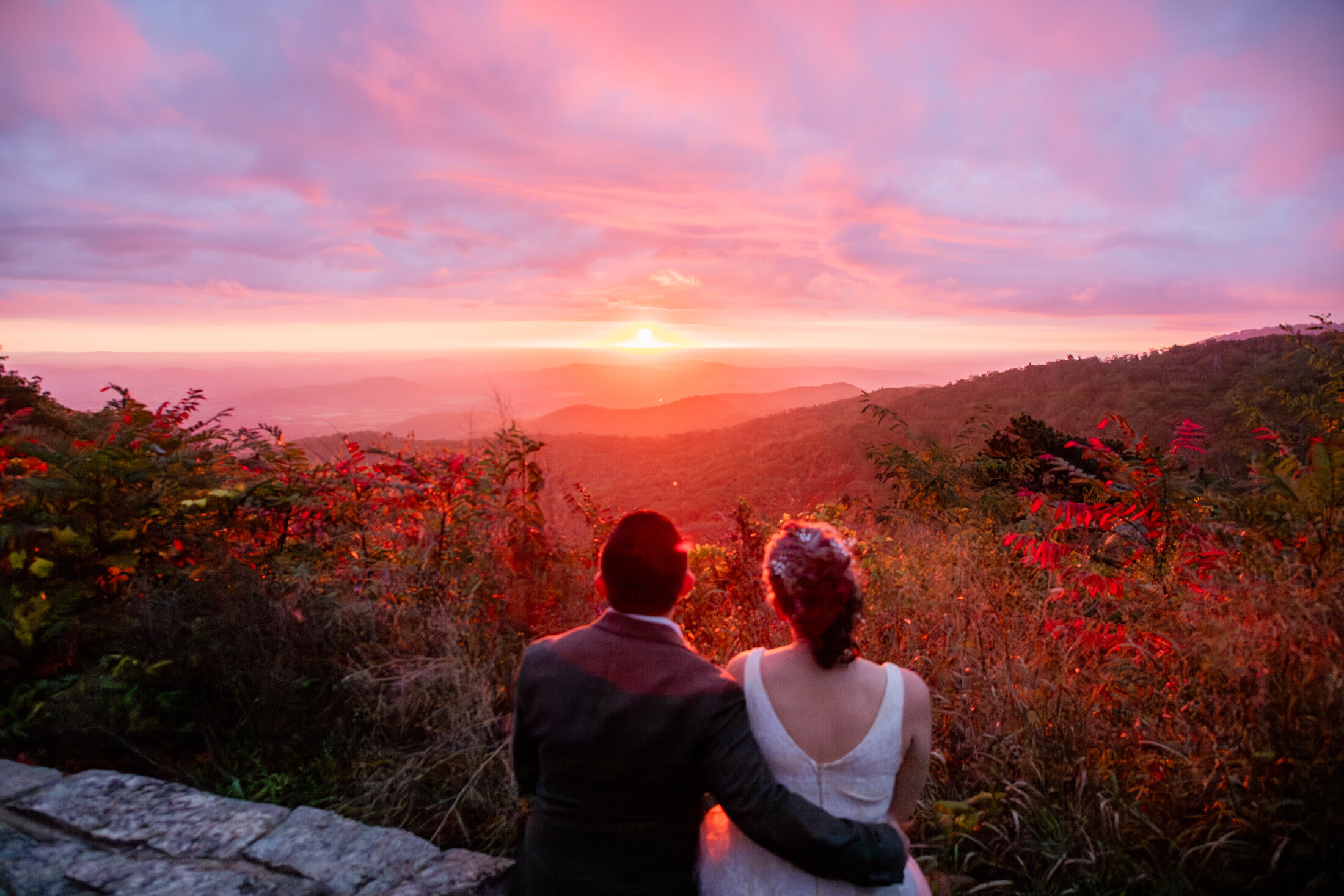
The views are genuinely spectacular. You’re standing on top of a mountain ridge with the Shenandoah Valley spreading below you in one direction and the Piedmont in the other.
It’s accessible. Unlike some dramatic landscapes that require serious backcountry experience, Shenandoah’s most stunning spots are reachable by most people. You can drive to within a short walk of ceremony-worthy views.
It’s close to everything. Shenandoah’s Front Royal entrance is 75 miles from Washington DC. Charlottesville is 20 miles from the Rockfish Gap entrance. It draws couples from across the mid-Atlantic and beyond.
Every season is beautiful in a completely different way. More on each season below — Shenandoah is genuinely worth visiting any time of year.
The variety is unmatched. Waterfalls, ridgeline overlooks, open meadows, boulder fields, old-growth forest — all within the same park. You can have a completely different elopement experience depending entirely on which location you choose.
How to choose the right Shenandoah location for your elopement
With ten or more genuinely great ceremony locations in the park, the choice can feel overwhelming. Here’s a simple framework:
Start with what kind of environment moves you. Do you want to be surrounded by sound and forest, like at Dark Hollow Falls? Standing on an open ridgeline with the valley below, like Stony Man or Blackrock Summit? In a wide, open meadow, like Big Meadows? The environment sets the emotional tone for your ceremony.
Then think about difficulty. Some locations involve significant rock scrambles (Bearfence Mountain). Others are a short, flat walk from the parking area (Jewell Hollow Overlook, Big Meadows). Match the trail to what you’re comfortable doing in your attire.
Then factor in light direction and timing. East-facing locations are best for sunrise; west-facing locations are best for sunset. Your ceremony timing should follow the light.
Finally, consider crowds. The south district (Blackrock Summit, Turk Mountain) is consistently less crowded than the central and north districts. Sunrise beats crowds at any location, any time of year.
Specific Shenandoah elopement locations
A closer look at each location — what the hike is like, what the light does, what to expect.
Stony Man Summit (Mile 41.7 on Skyline Drive)
The hike: About 1.6 miles round trip, with a gain of about 340 feet.
The view: Looking out over the Shenandoah Valley and the mountains beyond. On clear days, you can see for miles. This is a classic Blue Ridge panorama.
Best time: Morning, before the trail gets busy. Sunrise here is extraordinary if you’re willing to be on the trail before dawn.
Worth knowing: The last stretch of trail opens up onto dramatic rocky ledges that photograph beautifully. It feels earned even though it’s a short hike.
Crowds: Moderate. Popular enough to be busy on fall weekends, but manageable if you’re early.
Dark Hollow Falls (Mile 50.7 on Skyline Drive)
The hike: 1.4 miles out and back, descending to the falls. (This means you hike down first and climb back up — something to keep in mind in your attire.) The trail is only paved a very short way down, then becomes a rocky, steep path.
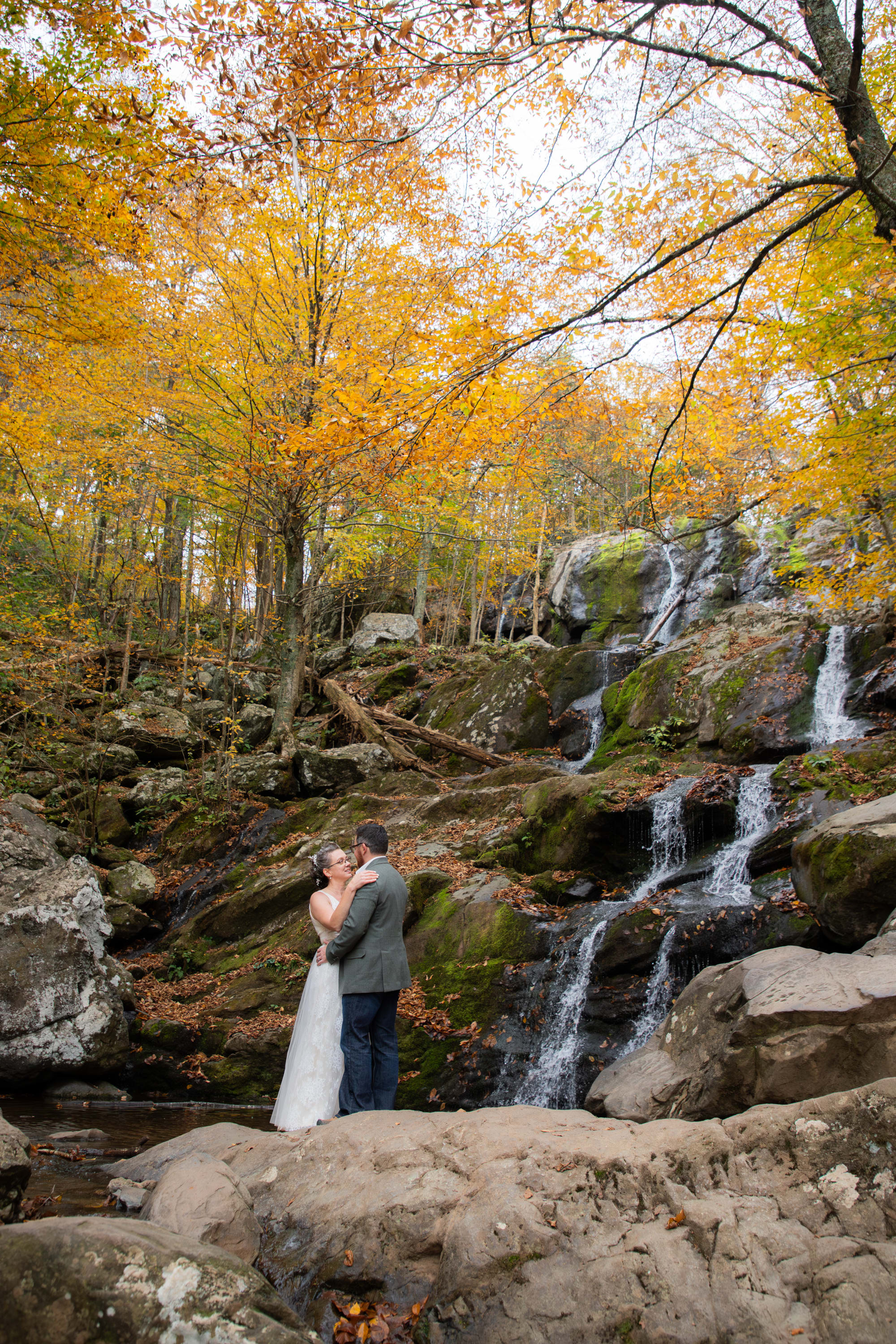
The view: A 70-foot tiered waterfall dropping through a forested gorge. Absolutely gorgeous, especially in spring when the water is running high.
Best time: Early morning (just after sunrise) for summer and fall — the light falls beautifully on the rocks just in front of the falls at that hour. Spring is peak season for water volume; go early morning or on a weekday.
Worth knowing: The sound is everywhere — water all around you, creating an immersive environment unlike any of the overlooks. The Dark Hollow trail connects to the Rose River Falls trail past the falls — if you follow that path, turn around and come back the way you came, or you’ll end up significantly further north on Skyline Drive than where you parked.
Crowds: The most-visited waterfall in Shenandoah. Go early or consider a weekday.
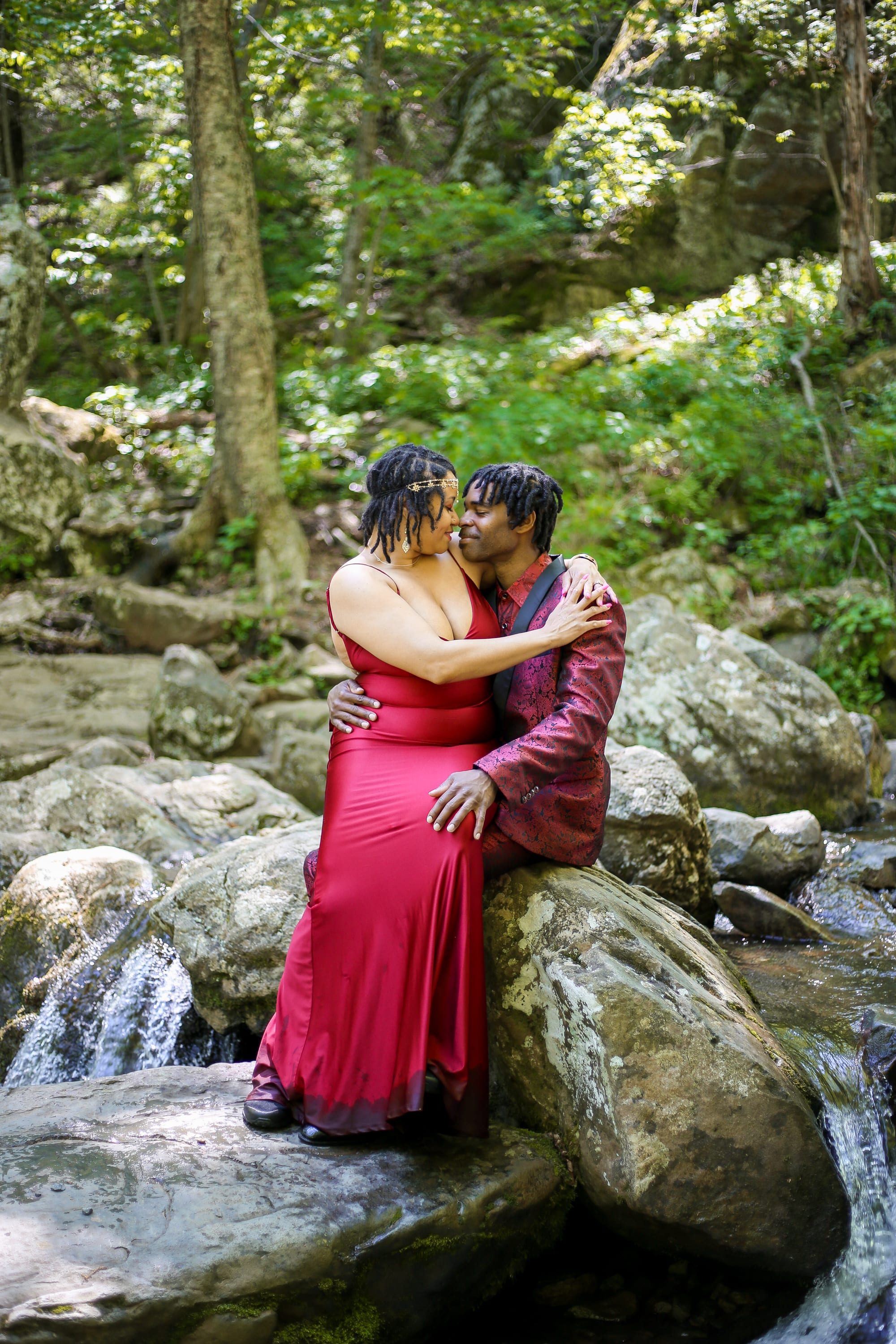
A couple I’ve photographed here: Grace and Todd exchanged private vows at the base of Dark Hollow Falls last year, the water settling into something calm and steady behind them the whole time. They leaned in close to hear each other’s words. Some places just know how to hold a quiet moment, and that one did.
Big Meadows (Mile 51 on Skyline Drive)
The hike: Minimal — the meadow is accessible directly from the Byrd Visitor Center area.
The view: A wide, open meadow surrounded by forest, with mountain views in the distance. Very different from the ridgeline spots — more expansive and pastoral.
Best time: Sunrise, when the meadow is often filled with deer and mist. Also beautiful in late October when the surrounding trees are turning.
Worth knowing: The scale. Standing in the middle of Big Meadows at sunrise with fog in the treeline feels like being in a painting. Deer are a common presence — observe from a distance and never feed or approach any wildlife.
Crowds: The visitor center area can be busy. The meadow itself disperses people well — you can usually find a quiet corner.
A couple I’ve photographed here: Gabby and James chose Big Meadows because they wanted their people around them — not a huge crowd, but enough that it felt like a real gathering, not just the two of them and me. Standing in that much open space, surrounded by loved ones, with the mountains stretching out in every direction and the light shifting the whole time — it’s the kind of setting that makes everyone go a little quiet without meaning to.
Bearfence Mountain (Mile 56.4 on Skyline Drive)
The hike: About 1 mile round trip, with a rocky scramble to the summit. This one requires some climbing over boulders — nothing technical, but not suitable for delicate footwear.
The view: 360-degree panorama. This is one of the few spots in Shenandoah where you can see in all directions from the summit.
Best time: Morning or evening light. This summit is worth the effort at any time, but golden hour is special.
Worth knowing: Bearfence has a raw, exposed quality that some of the easier overlooks don’t have — it genuinely feels like you’ve gotten somewhere.
Crowds: Less crowded than Stony Man simply because the scramble filters people out. A good choice if you want more solitude.
Blackrock Summit (Mile 84.8 on Skyline Drive)
The hike: About 1 mile loop to the summit. The trail is rocky.
The view: Dramatic quartzite boulders that change color in different light — from grey to white to almost golden in the late afternoon. The views of the southern Shenandoah Valley are exceptional.
Best time: Late afternoon and sunset. The way the quartzite catches golden hour light is exceptional.
Worth knowing: It doesn’t look like anywhere else in the park. The rocks have a strange, moonscape quality in overcast light, and a warm amber glow at sunset. The south district location means noticeably fewer crowds than the north and central sections.
Crowds: The south district of the park sees fewer visitors in general. Blackrock is popular but not overwhelming.
Hawksbill Summit (Mile 45.6 on Skyline Drive)
The hike: About 2.1 miles round trip with approximately 520 feet of elevation gain — the most significant climb of any location on this list, but well worth it.
The view: The highest point in Shenandoah National Park at 4,051 feet. The panoramic views from the summit shelter are among the best in the park — an unobstructed 360-degree view on clear days.
Best time: Morning for the best light and the fewest people. Sunset is also stunning, but plan your descent carefully as the trail can be challenging in fading light.
Worth knowing: The elevation means it can be significantly cooler than lower elevations, even in summer. Layers are important here. The summit shelter provides a natural framing element that photographs beautifully.
Crowds: Moderate. Less trafficked than Big Meadows or Dark Hollow Falls but more popular than the south district locations.
Compton Peak (Mile 10.4 on Skyline Drive)
The hike: About 2.4 miles round trip with a moderate climb through forest.
The view: Views of the north Shenandoah Valley and the Front Royal area. Less dramatic than the central and south district overlooks, but the solitude more than compensates.
Best time: Morning or late afternoon. The north-facing orientation means the light behaves differently here than at most other Shenandoah locations.
Worth knowing: Compton Peak is genuinely one of the least crowded locations in the park. If privacy and solitude matter more to you than a classic panoramic view, this is worth serious consideration. The old-growth forest on the approach is beautiful.
Crowds: Very low. One of the best options if you want the park essentially to yourselves.
Limberlost Trail (Mile 43.0 on Skyline Drive)
The hike: 1.3 mile loop, accessible and relatively flat.
The view: Old-growth hemlock forest — towering, ancient trees with a cathedral quality. This is not a ridgeline view; it’s an entirely different kind of beauty.
Best time: Spring for wildflowers and lush green. Fall for foliage filtered through the old trees.
Worth knowing: Limberlost is one of the most accessible trails in Shenandoah and one of the only ones with a hard-packed surface suitable for wheelchairs and mobility aids. It’s also dog-restricted — leave pets at home or at the trailhead for this one.
Crowds: Low to moderate. Popular with casual hikers, but the forest absorbs people well and there are quiet corners to find.
Jewell Hollow Overlook (Mile 36.4 on Skyline Drive)
The hike: Roadside — essentially no hiking required. Park and walk a few feet.
The view: West-facing overlook with beautiful views of the valley and the mountains beyond. Golden hour here is genuinely stunning.
Best time: Late afternoon and sunset. As a west-facing overlook, this is one of the best roadside sunset ceremony spots in the park.
Worth knowing: The accessibility makes this a wonderful option for couples with guests who have mobility limitations, or for anyone who wants a beautiful ceremony without a significant hike. The stone wall at the overlook edge provides a natural ceremonial backdrop.
Crowds: Low. Not a destination trail, so it sees fewer visitors than the named summit locations.
Turk Mountain (Mile 94.1 on Skyline Drive)
The hike: About 2.4 miles round trip with moderate elevation gain.
The view: Views of the southern Shenandoah Valley and the surrounding ridges. The summit has rocky outcroppings with open views in multiple directions.
Best time: Morning or late afternoon. The south district light is beautiful at both ends of the day.
Worth knowing: Turk Mountain is one of the most remote-feeling locations in the park without being difficult to reach. You are very unlikely to share the summit with anyone else. For couples who want true solitude — the sense that the park belongs entirely to you — Turk Mountain delivers that reliably.
Crowds: Very low. The south district’s least-trafficked summit.
Fall dates are filling — don’t wait to reach out.
Shenandoah Ceremony Locations Compared
Here’s a side-by-side look at the most popular ceremony spots in the park — milepost location, trail difficulty, best seasons, and whether a permit is required.
| Location | Milepost | Distance | Difficulty | Best For | Best Season | Crowds | Permit Needed? |
|---|---|---|---|---|---|---|---|
| Stony Man Summit | 41.7 | 1.6mi RT | Moderate | Sunrise, panoramic views | Spring, Fall | Low-Moderate | No if you have under 15 people involved |
| Dark Hollow Falls | 50.7 | 1.4mi RT | Moderate | Waterfall ceremony | Spring, Summer | Moderate-High | No if you have under 15 people involved |
| Big Meadows | 51.0 | Flat | Easy | Wildflower ceremonies, fog | Spring, Fall | Moderate | No if you have under 15 people involved |
| Bearfence Mountain | 56.4 | 1.2mi RT | Moderate (scramble) | 360-degree views, adventurous couples | Summer, Fall | Low | No if you have under 15 people involved |
| Blackrock Summit | 84.8 | 1.0mi loop | Easy | Sunset, boulder fields | Fall, Summer | Low | No if you have under 15 people involved |
| Hawksbill Summit | 45.6 | 2.1mi RT | Moderate | Highest point in park | Summer, Fall | Low-Moderate | No if you have under 15 people involved |
| Compton Peak | 10.4 | 2.4mi RT | Moderate | Solitude, fewer crowds | Spring, Fall | Very Low | No if you have under 15 people involved |
| Limberlost Trail | 43.0 | 1.3mi loop | Easy (accessible) | Old-growth forest, accessible | Spring, Fall | Low | No if you have under 15 people involved |
| Jewell Hollow Overlook | 36.4 | Roadside | Easy | Golden hour, accessible ceremony | Fall, Summer | Low | No if you have under 15 people involved |
| Turk Mountain | 94.1 | 2.4mi RT | Moderate | True solitude, southern section | Spring, Fall | Very Low | No if you have under 15 people involved |
Shenandoah elopement permit requirements
Understanding the permit process is one of the most important parts of planning a Shenandoah elopement. Here’s everything you need to know. For a complete deep-dive including the Blue Ridge Parkway, Virginia state parks, and the commercial photography question, see the full Shenandoah permit guide.
When you do NOT need a permit
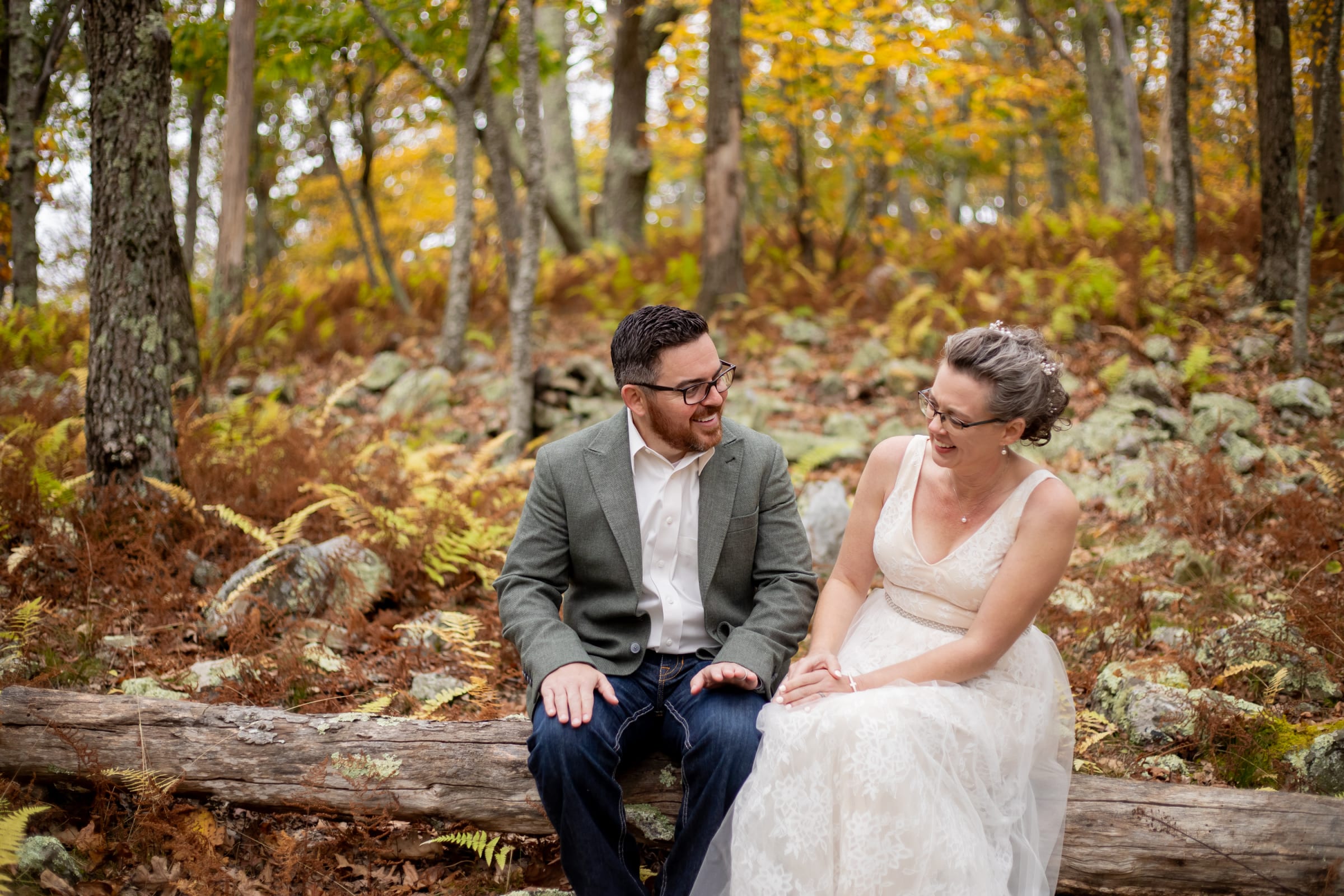
No permit is required for ceremonies with 15 or fewer people involved. This headcount includes everyone at the ceremony — you and your partner, your photographer, your officiant, witnesses, and any guests. As long as the total is 15 or fewer, you are free to hold your ceremony at any accessible park location without any paperwork.
The vast majority of elopements fall into this category. A ceremony with the two of you, a photographer, an officiant, and a handful of close family or friends is well within the no-permit threshold.
When you DO need a permit
If your ceremony involves 16 or more people, a Special Use Permit is required from the National Park Service.
The fee is $150.
This applies regardless of whether your ceremony is at a trailhead, a summit, a waterfall, or a roadside overlook. The headcount is what triggers the requirement, not the location.
How to apply for a Shenandoah Special Use Permit
The application process goes directly through Shenandoah National Park’s permit office. Here’s what the application requires:
- Your desired ceremony date and time
- The specific location — trail name, milepost, or overlook name. The park uses this to assign permit areas and check for conflicts with other permit holders on the same date.
- Estimated total headcount — everyone present, including the ceremony party, photographer, officiant, and all guests
- A brief description of the ceremony
- Contact information
The park may follow up with questions or request additional information before approving your permit.
How far in advance should you apply?
As early as possible — especially for fall. October is peak season in Shenandoah, and popular ceremony locations can be reserved months in advance. If you’re planning a fall elopement at a well-known location like Stony Man or Big Meadows, submitting your application several months ahead is strongly advised.
For off-season dates (winter, early spring, midsummer), a minimum of 30 days prior is required — but earlier is always better.
What the permit does and doesn’t cover
The permit authorizes your ceremony at a specific location on a specific date. It does not grant exclusive access to that location. Other park visitors may be present during your ceremony, and the park cannot clear the area for you.
The permit does not include:
- Exclusive use of the location
- Permission to set up structures or decorations without specific approval
- Amplified music (this requires separate approval)
- Any alteration to the natural environment
What’s always required, permit or not:
- Leave no trace — pack out everything you bring in
- No damage to vegetation, rocks, or park features
- Respect for other park visitors
What to do if your preferred location is unavailable
If the park informs you that your requested location is already permitted for your date, you have two options: request an alternative location or adjust your date. Having a backup location in mind when you apply is always a good idea. Your photographer can help you identify a comparable alternative — Shenandoah has enough excellent locations that there is almost always a strong second choice.
Contacting the permit office
For the most current application process, fees, and availability, contact Shenandoah National Park directly:
- Website: nps.gov/shen
- Phone: The park’s main visitor line can direct you to the permit office
Requirements and processes can change, so confirming directly with the park before you finalize your plans is always the right move.
Building your full Shenandoah elopement day
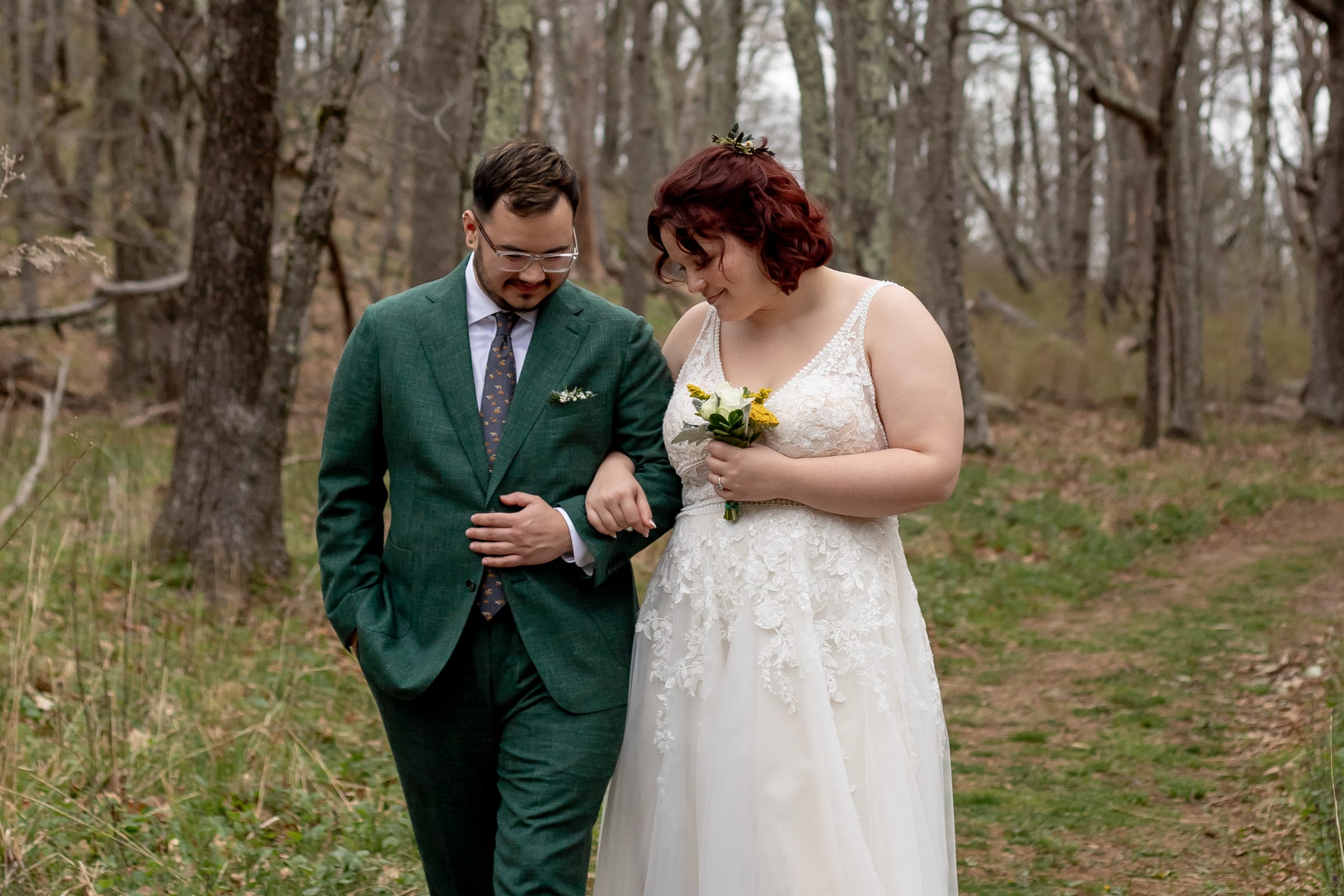
One of the most overlooked parts of elopement planning is thinking through the full day — not just the ceremony, but the complete arc from morning to evening. Shenandoah is large enough and varied enough that a well-planned day can include multiple distinct environments and experiences.
Note: exact times will look different depending on the season — sunrise in June is before 6am, while sunrise in December is closer to 7:30am. Your photographer will help you build a timeline specific to your date.
A sample sunrise elopement day
- 4:30am — Wake up, get ready at your lodging
- 5:30am — Drive to Skyline Drive entrance
- 6:00am — On trail or at overlook, positioned for sunrise light
- 6:30am — Ceremony as the sun clears the ridge
- 7:00–9:00am — Portrait time while the park is quiet and the light is golden
- 9:30am — Drive to a second location (waterfall or meadow) for additional portraits
- 11:00am — Picnic celebration at Big Meadows or your chosen picnic area
- Afternoon — Return to lodging, rest, dinner in town
A sample sunset elopement day
- Morning — Relax, get ready at your leisure
- Early afternoon — Arrive at the park, begin exploring your location
- 3:00–5:00pm — Portrait time at overlooks while the light builds
- 5:30pm — Ceremony as the sun approaches the ridge
- 6:00–7:00pm — Final portraits in the last golden light
- Evening — Dinner in Luray, Staunton, or Charlottesville
Luxury picnic celebrations
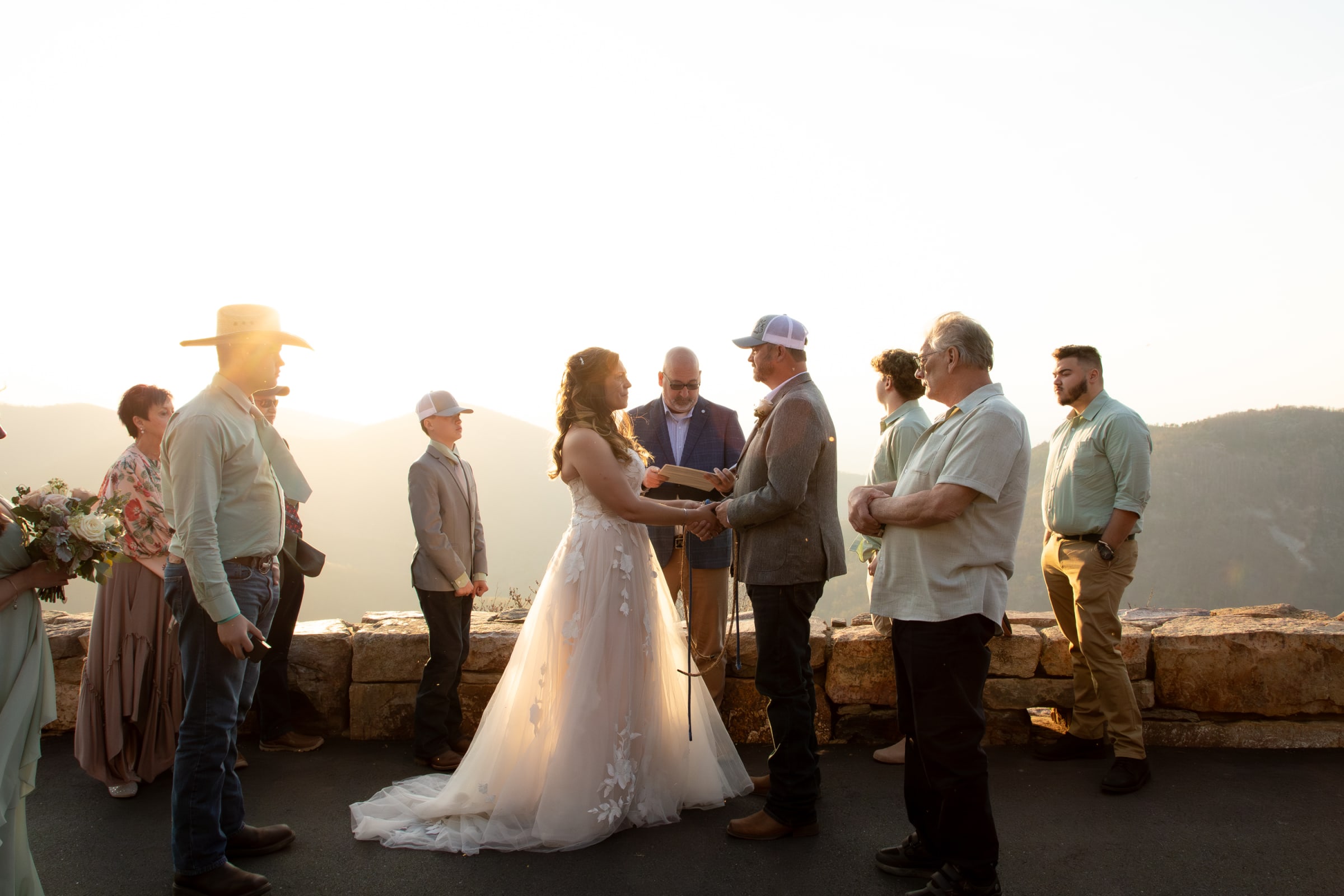
An elopement picnic in Shenandoah is one of the most beautiful ways to celebrate after the ceremony. The park has several excellent picnic areas, and a well-planned picnic adds a celebratory moment that extends the day beautifully.
Big Meadows Picnic Area — One of the most stunning picnic spots in the park. An open meadow surrounded by forest, with mountain views and beautiful light throughout the day.
Dundo Picnic Grounds — Near the south district, close to Blackrock Summit. Quiet, wooded, and removed from the main visitor corridors.
Loft Mountain Wayside — A great alternative in the south district with easy access and space.
I love helping couples make their picnic feel intentional — not just a blanket and grocery store snacks. That means bakery recommendations for custom cakes or pastries, floral coordination, blanket and textile styling that photographs beautifully, and personalized touches that make the celebration feel like yours. If a picnic sounds like the right way to celebrate, mention it when you reach out.

Seasons in Shenandoah
Spring (March–May)
What it’s like: Variable. Early spring (March) can still feel like winter — cold, potentially snowy, occasionally dramatic. By April, the wildflowers are appearing and the waterfalls are running full from snowmelt. May brings the forest canopy fully into green.
Why it’s special: Wildflowers and waterfalls. The forest floor is carpeted in trillium, bluebells, and other spring ephemerals. Dark Hollow Falls in April is extraordinary.
What to expect: Weather can shift fast. Pack layers. Mud is a real consideration on some trails, but that makes it fun.
Crowds: Low to moderate. Much less crowded than fall.
Summer (June–August)
What it’s like: Warm days (70s-80s at elevation, cooler than the valley), lush green forest, afternoon thunderstorms that roll through regularly.
Why it’s special: Morning light. The park is quiet before 9am, the forest is intensely green, and the mist that sits in the valley creates a dreamy layered effect on overlook photos.
What to expect: Hazy days can reduce visibility at overlooks. Humidity is real. The afternoons can bring storms, so morning ceremonies make the most sense.
Crowds: Busy, especially on weekends. Weekdays and early mornings are much more manageable.
A couple I’ve photographed here: Alek and Jon were married right inside Big Meadows Lodge, rain hammering the windows the whole ceremony. We took portraits down at Dark Hollow Falls afterward — still pouring, no signs of stopping. They didn’t fight it. They leaned all the way in, rain running down their skin, and the laughing that came out of that was the kind you can’t plan for. It’s still one of the galleries I go back to most — the rain didn’t take anything away from that day. If anything, it’s the reason it was so completely theirs.
Fall (September–November)
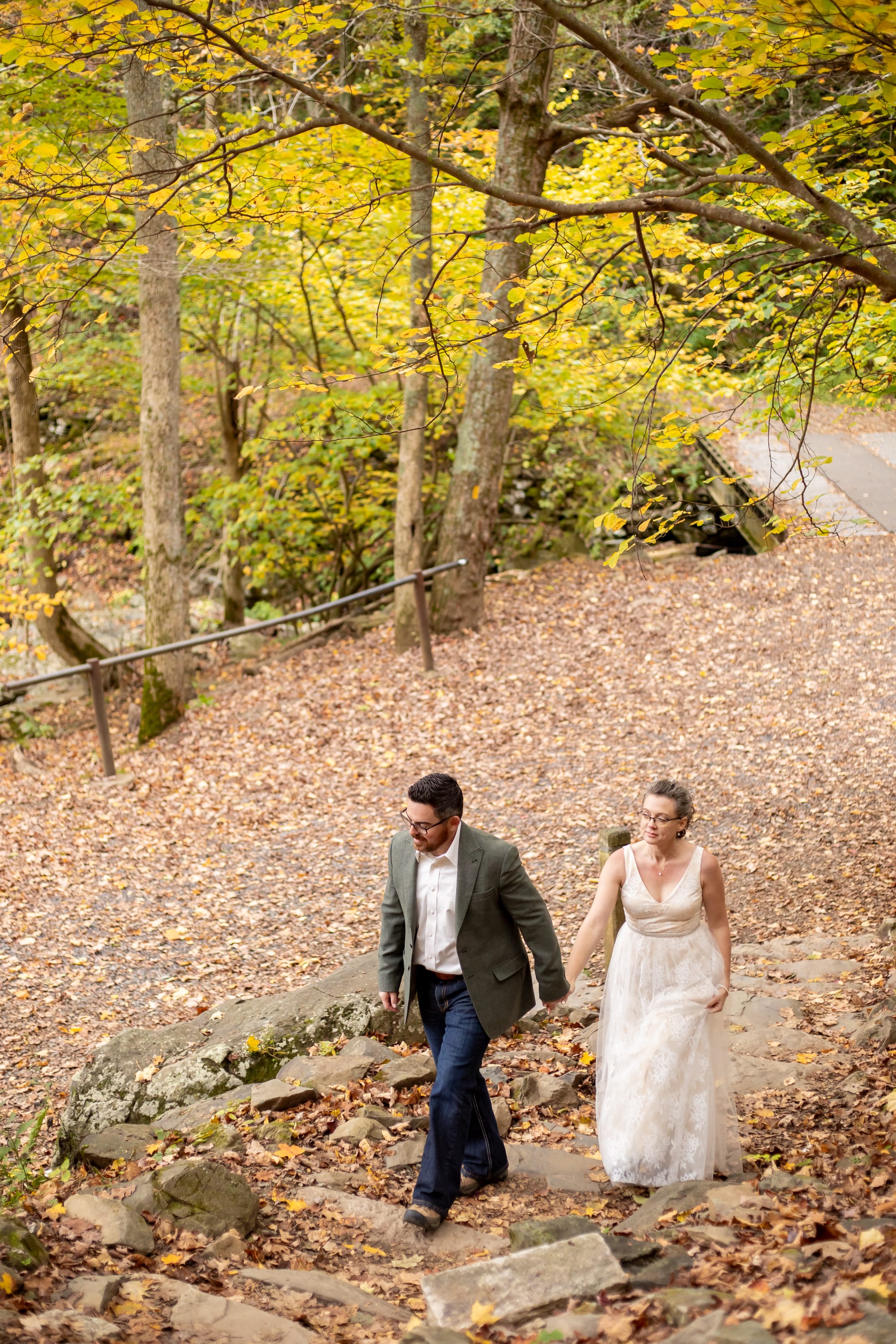
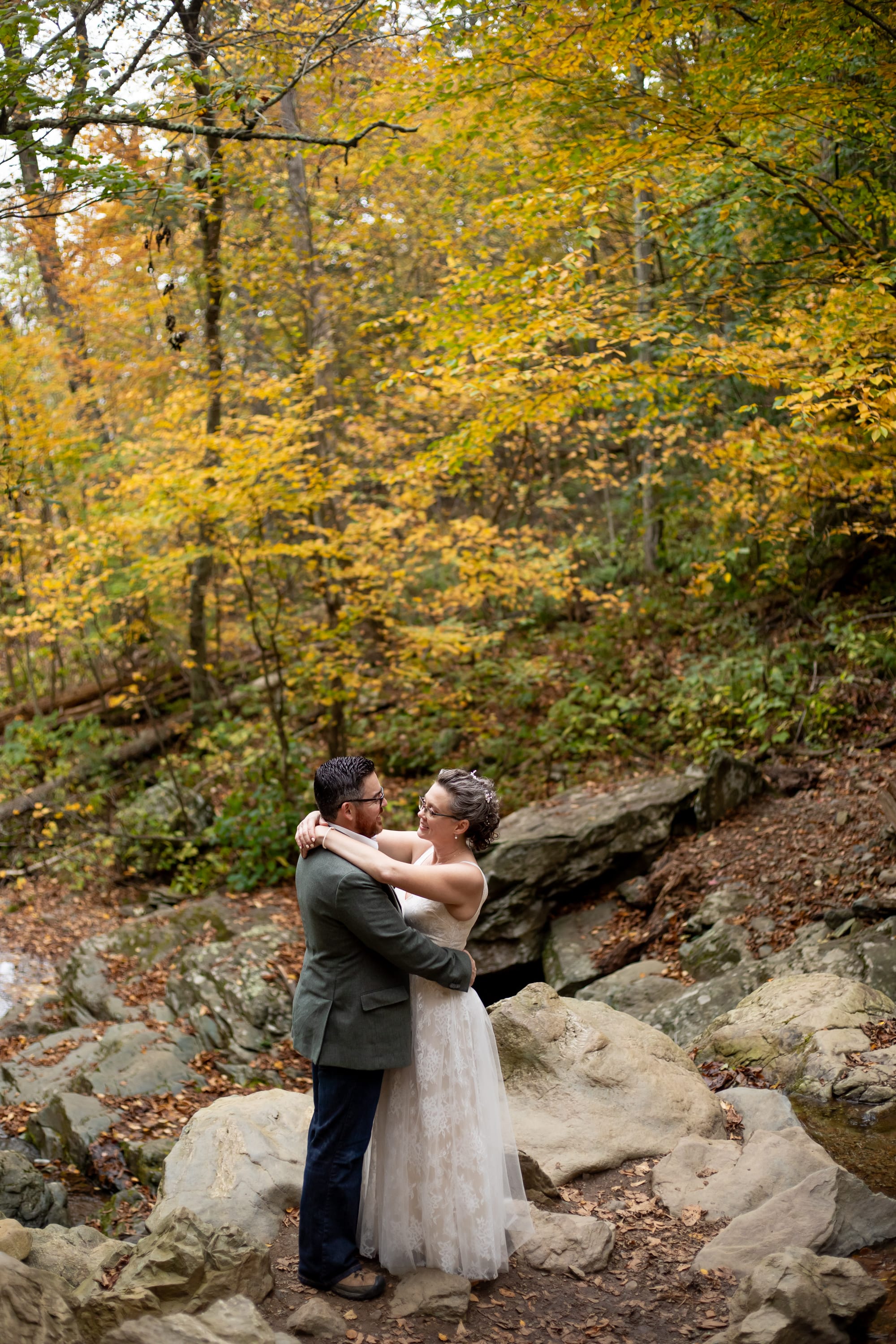
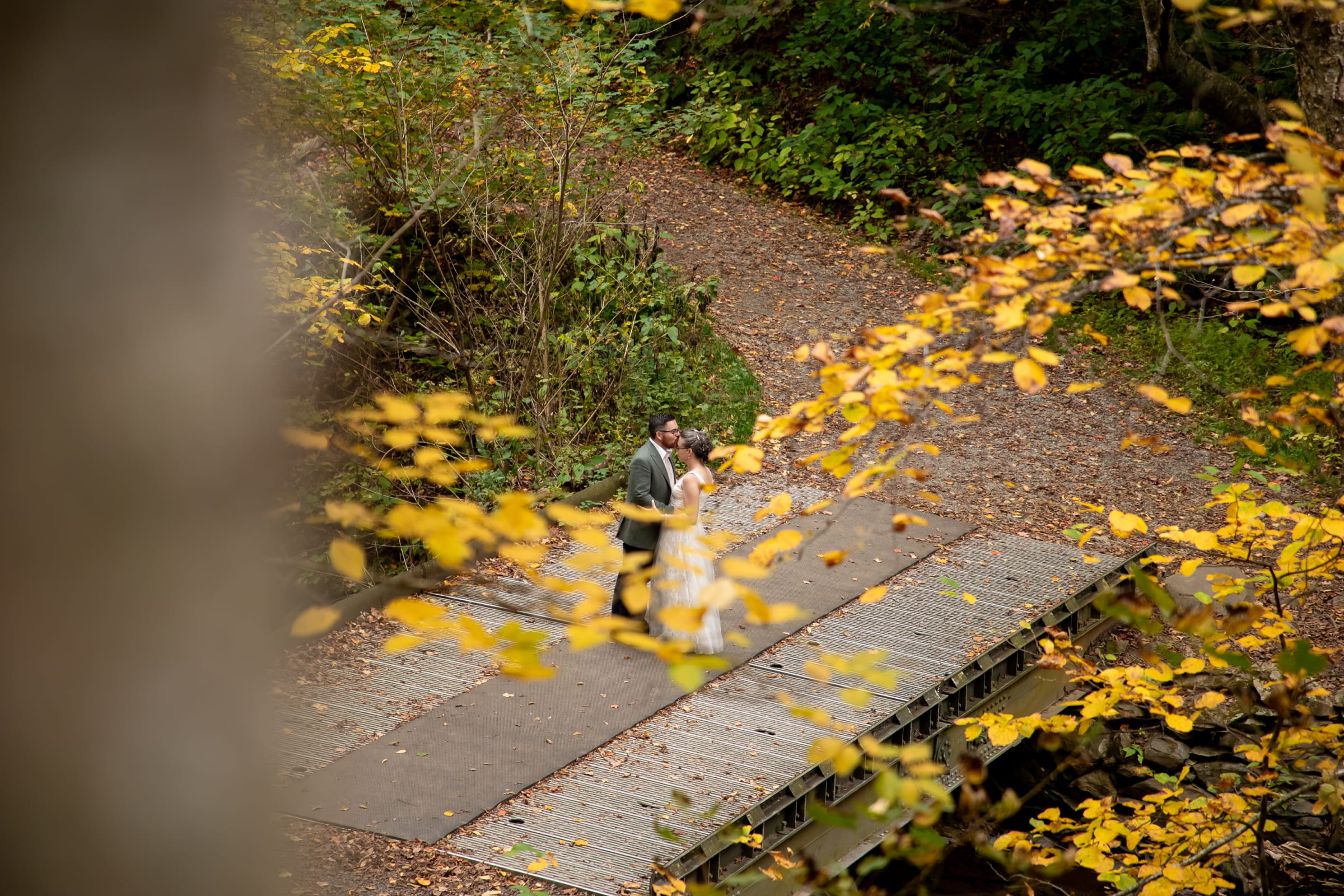
What it’s like: This is Shenandoah’s most popular season, and with good reason. Peak foliage in October is extraordinary — reds, oranges, and golds rolling across the ridgelines as far as you can see.
Why it’s special: The color is indescribable. Standing on a Shenandoah overlook in mid-October with the whole valley on fire is something you have to experience in person.
What to expect: Crowds. This is peak season — park entrance lines on fall weekends can be long, popular overlooks fill up by mid-morning, and accommodation books months in advance. Weekdays and early mornings are highly recommended to avoid crowds.
Photographers book up fast for fall. If you’re considering a fall Shenandoah elopement, start planning 10-12 months out.
Winter (December–February)
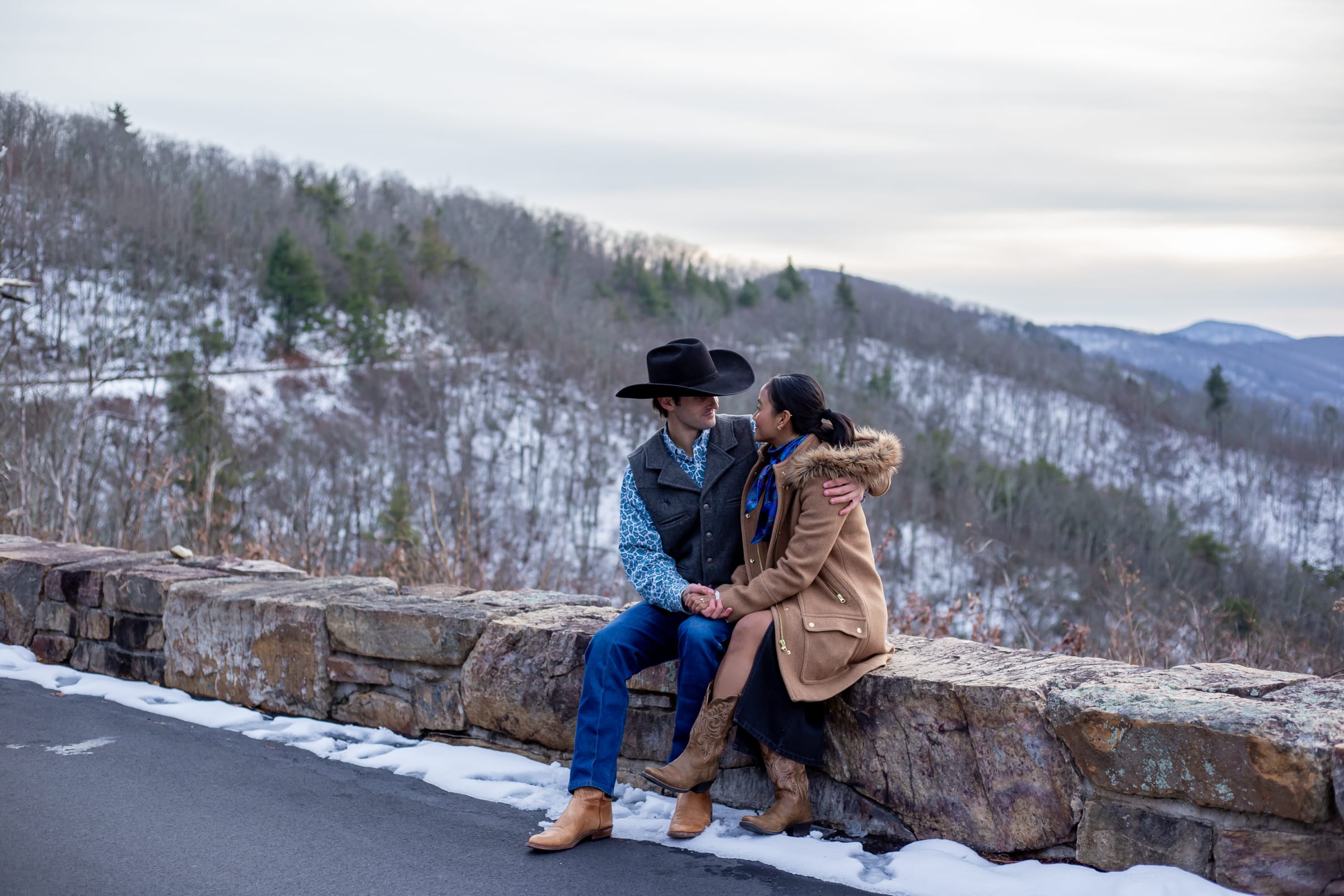
What it’s like: Cold, quiet, and occasionally magical. Snow transforms the park into something completely different. Frost on the bare tree branches. Ice along waterfalls.
Why it’s special: The solitude. Winter Shenandoah is a completely different experience — you might have an overlook entirely to yourself. The light is lower and softer. The atmosphere is moody and beautiful.
What to expect: Skyline Drive can close for snow, ice, and high winds. Always check conditions. Some facilities are closed for the season. Dress warmly — seriously warmly.
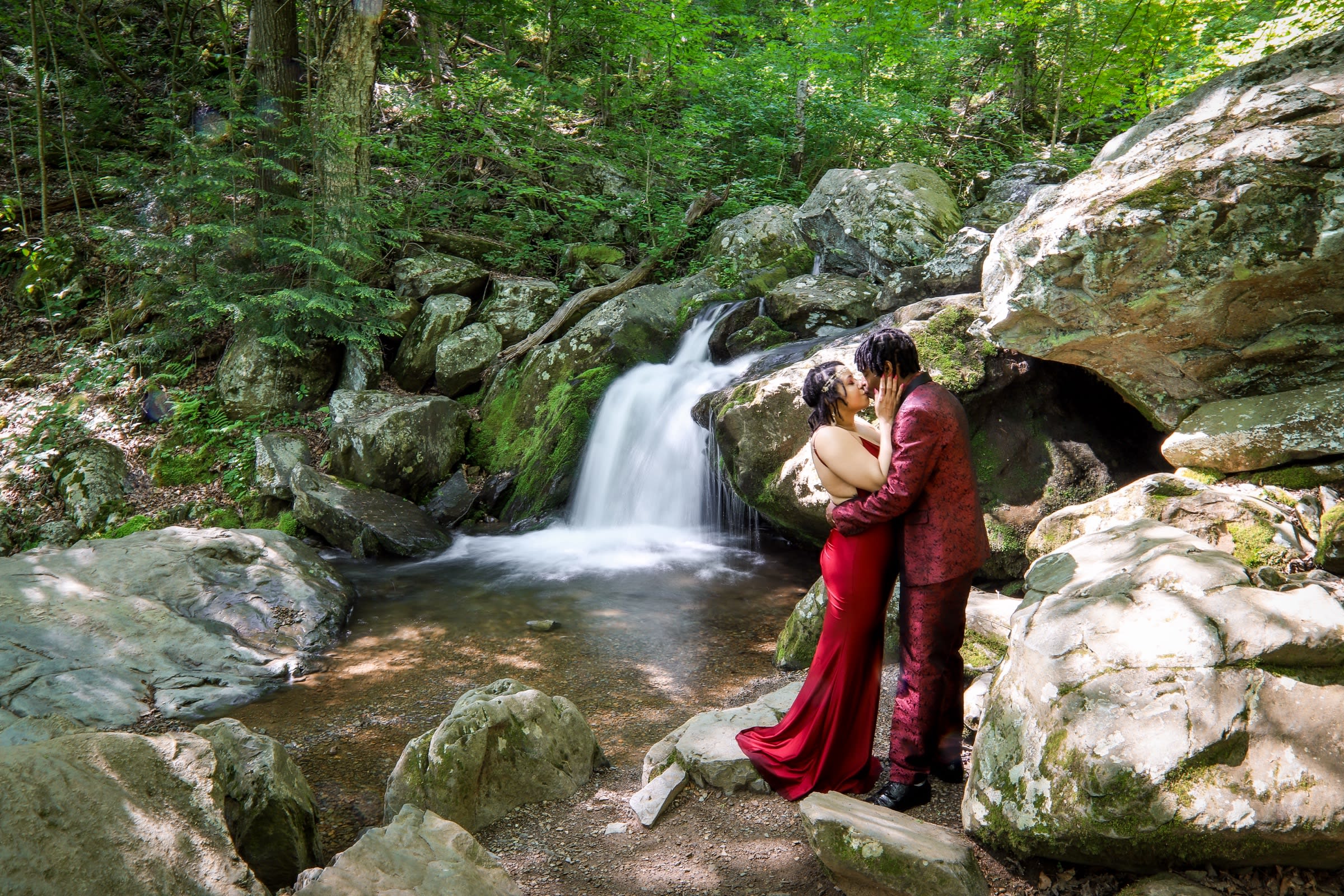
Sunrise vs. sunset at Shenandoah: which should you choose?
Both are wonderful. A way to think about it:
Sunrise
- The park is quiet — often completely empty
- The light starts soft and golden, building gradually
- Mist is common, especially in the valley (magical for photos)
- You might share your ceremony with deer and absolutely nothing else — observe from a distance and never feed or approach wildlife
- Requires waking up very early (sunrise in October is around 7:15am, but you need to be on trail before that)
- Good for: couples who are morning people, anyone wanting true solitude, fall and spring particularly
Sunset
- Warm, directional golden light
- The valley below takes on a golden haze
- You have the whole day to get ready, relax, and not set an alarm for 4am
- More people in the park, but most leave after golden hour
- Good for: couples who are not morning people, summer when sunrise is extremely early, Blackrock Summit (the rocks are best at sunset)
A general guideline: if an early wake-up is doable, sunrise in fall or spring is hard to beat. If pre-dawn sounds miserable, sunset is equally beautiful in the Summer.
For a deeper comparison — light quality, crowd differences, which specific locations work best for each — see the full sunrise vs. sunset guide for Shenandoah elopements.
What to wear for a Shenandoah elopement
A few practical notes on attire:
Layers are essential. Mountain temperatures at 3,000+ feet are different from valley temperatures. Even in summer, morning ceremonies can be cool. October can be cold. Always bring an extra layer you can remove once the light is right.
Your shoes matter. Some Shenandoah locations (Stony Man, Bearfence) involve rocky terrain. As a general rule, avoid stilettos — wedges or block heels work for most overlooks. For hiking locations, hiking boots or sturdy shoes are a must. Many brides wear boots under their dress, and it’s a look that works.
Fabric considerations for photos:
- Flowy chiffon and silk move beautifully in mountain breezes
- Lace photographs beautifully in natural light
- Avoid extremely bright white — it can blow out in direct sun
- Earth tones (ivory, cream, dusty rose, sage) photograph exceptionally well against the Blue Ridge palette
For a full breakdown of fabrics, shoes, and layering by season, see what to wear for a mountain elopement.
Logistics: everything else you need to know
Park entrance fee: Set by the National Park Service — current amount is on the NPS Shenandoah site. Keep your receipt for re-entry.
Cell service: Spotty throughout the park. Don’t count on GPS or your carrier working everywhere on Skyline Drive. Download offline maps ahead of time.
Restrooms: Available at all major visitor centers and waysides. Some restrooms close in the off season, but pit toilets are always available.
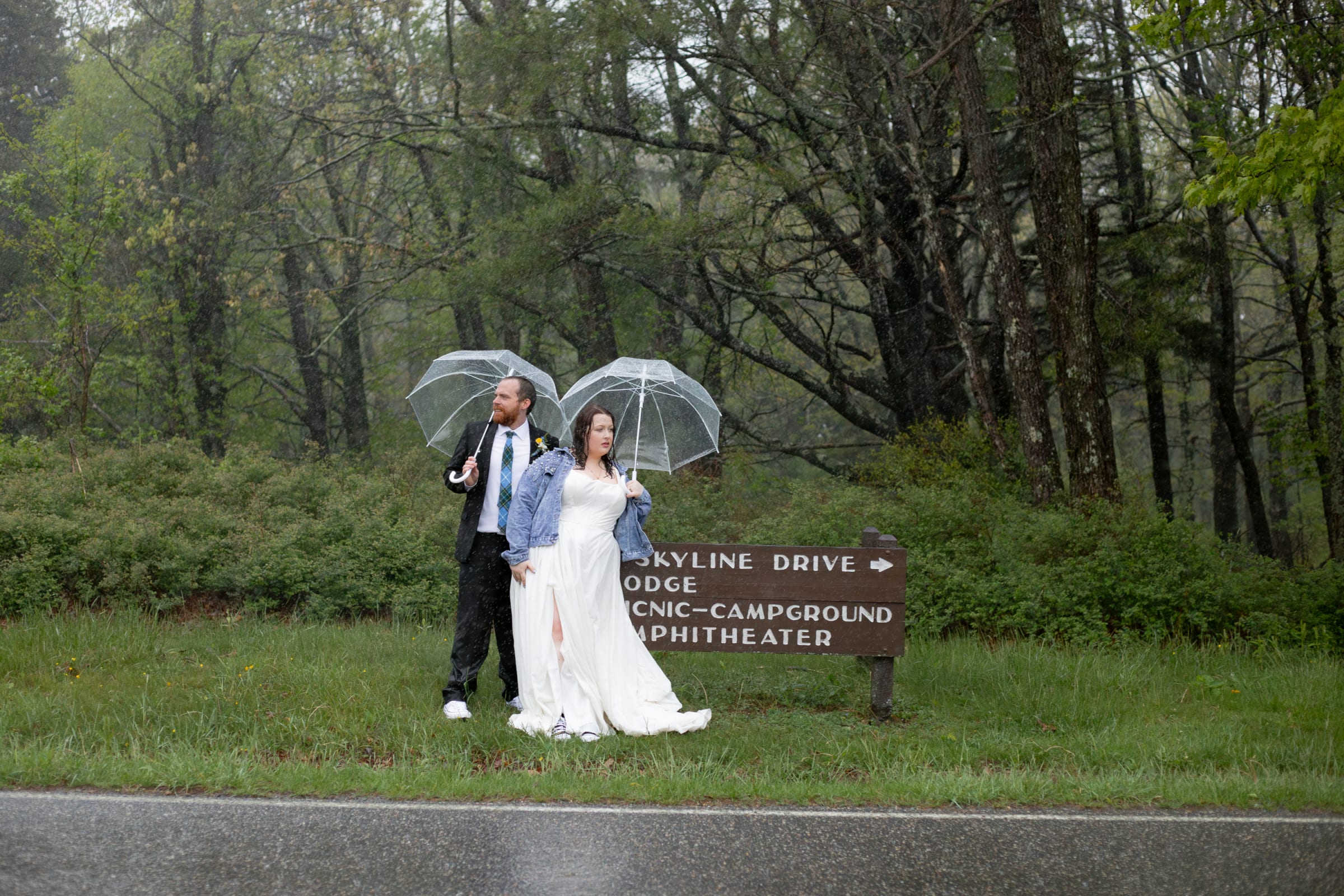
Weather: Mountain weather changes quickly. Check the forecast the morning of, but have a plan for unexpected shifts. A light rain can make for extraordinary photos — have a backup plan for severe weather only.
Virginia marriage license: Required before your ceremony. The fee is around $30 (varies by county), valid for 60 days, available at any circuit court clerk’s office in Virginia. No waiting period. Your officiant signs and returns it after the ceremony.
Park entrances:
- Front Royal entrance — Front Royal (closest to DC, ~75 miles)
- Thornton Gap — US-211 near Luray
- Swift Run Gap — US-33
- Rockfish Gap entrance — near Waynesboro (closest to Charlottesville)
Lodging nearby:
- Luray, VA — The most popular base camp for north Shenandoah. Good variety of accommodations.
- Sperryville, VA — Charming, small town near the Front Royal entrance with beautiful inns.
- Staunton, VA — Near the Rockfish Gap entrance. A genuinely wonderful small city with great restaurants.
- Skyland Resort — Inside the park at milepost 41.7. The highest-elevation resort in Shenandoah with stunning views.
- Big Meadows Lodge — Inside the park itself. Reservations required far in advance for fall.
The park entrance: Lines can be long on fall weekends. Purchase your annual pass before arriving if you plan to visit multiple times.
Working with a Shenandoah elopement photographer
I’m Alysa Segovia, and I’ve photographed more than 30 elopements in Shenandoah National Park — across every season, at every major ceremony location, and in conditions ranging from perfect golden hour to heavy fog and rain. This park has been part of my work for over 10 years now, and my work has also been recognized with an Elopement Legend Award. I’m a specialist here, with 10+ years of photographing and hiking Shenandoah — I know its trails and overlooks by heart. A Shenandoah elopement photographer does more than show up and take pictures. They know which overlook faces west for the best sunset light — like Raven’s Roost, which has some of the most dramatic west-facing cliffs in the region — which trail is going to be crowded on a Saturday in October, and how to build a timeline that puts you in the right place at the right moment.
Here’s what to look for when choosing your photographer — or see the full list of questions to ask your elopement photographer before you book.
Familiarity with the park. Shenandoah has hundreds of possible locations. A photographer who has shot here extensively knows the difference between a location that looks great on Instagram and one that actually performs well in real light at real times of day.
Timeline planning support. Your ceremony timeline is one of the most important planning documents you’ll create. It needs to account for sunrise and sunset times on your specific date, drive times between locations, the length of your hike in and out, golden hour windows, and buffer time for unexpected delays. Your photographer should be actively involved in building this.
Honest guidance on crowds and conditions. The best photographers will tell you when your first-choice location is likely to be crowded and suggest alternatives — even if that means redirecting you away from the postcard spots toward something less well-known and more genuinely yours.
Permit knowledge. Your photographer should understand the permit requirements and be able to help you navigate the application process. Familiarity with the Special Use Permit process and the 15-person threshold is a good indicator that they’ve planned Shenandoah elopements before and know what to expect.
Experience with the light. Blue Ridge light is different from anywhere else — the haze, the layered ridges, the way golden hour builds slowly and then intensifies. A photographer who knows this light shoots differently than one who’s figuring it out for the first time.
Planning your Shenandoah elopement: the short version
- Book your photographer (for fall, 10-12 months out) — see collections and availability →
- Choose your location based on the environment, light direction, and difficulty
- Apply for permit if needed (required for ceremonies with 16 or more people) — do this early
- Get your Virginia marriage license (valid for 60 days, so don’t get it too early)
- Book lodging near the park
- Plan your ceremony timeline with your photographer
- Download offline maps for your phone
- Pack layers, snacks, and a sense of adventure
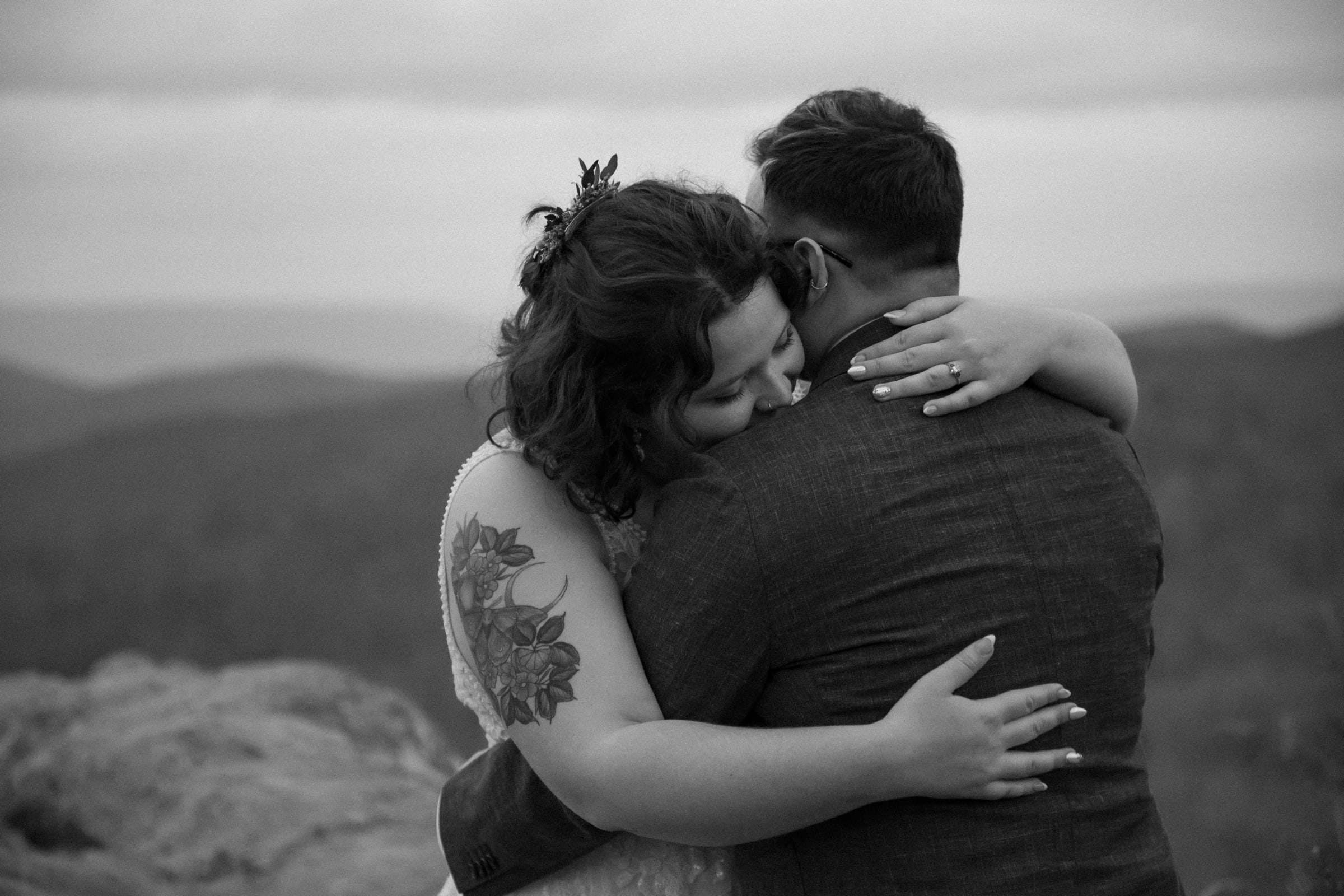
If you’re considering a Shenandoah elopement, I’d love to talk through your vision and help figure out which location and season makes the most sense for you. As your Shenandoah National Park elopement photographer, this is the park I know best and the one I shoot in most. Fall dates are filling — if October is on your radar, now is the right time to reach out.
Every elopement has a perfect moment — let’s find yours.
More Shenandoah elopement guides
- Raven’s Roost Overlook elopement guide
- Shenandoah elopement cost breakdown
- Big Meadows elopement guide
- Blackrock Summit elopement guide
- Dark Hollow Falls elopement guide
- Stony Man Summit elopement guide
- Shenandoah permit guide
- Eloping in Shenandoah in winter
- When to plan your fall Shenandoah elopement
- Where to stay for your Shenandoah elopement weekend
- Best restaurants near Shenandoah National Park
- What a Shenandoah elopement day actually looks like
- Best elopement locations across Virginia
- Spring elopement in Shenandoah National Park
- Sunrise vs. sunset: when to elope in Shenandoah
- Snead Farm trail elopement guide
Frequently Asked Questions
Do you need a permit to elope in Shenandoah National Park?
No permit is required for ceremonies with 15 or fewer people involved. If your ceremony includes 16 or more people, a Special Use Permit is required from the National Park Service. The fee is $150.
What is the best time of year to elope in Shenandoah?
Every season offers something different. Fall (October especially) is peak foliage — spectacular but crowded and books fast. Spring brings wildflowers and full waterfalls. Summer is lush and green. Winter is moody and serene.
Is Shenandoah good for a sunrise elopement?
Yes — Shenandoah sunrises are extraordinary. The park is quiet, the light is golden and misty, and you might share your ceremony with nothing but deer and fog. It requires an early start, but it's worth every minute.
How crowded is Shenandoah National Park?
Fall weekends are the most crowded. The south district tends to be less congested than the north and central districts. Weekdays are significantly quieter than weekends. Arriving early (sunrise) beats the crowds at any time of year.
Is Skyline Drive open year-round?
Skyline Drive is generally open year-round but closes for inclement weather including ice, high winds, and heavy snow. Always check current conditions at nps.gov/shen or call the park.
Are dogs allowed in Shenandoah National Park?
Yes. Dogs are allowed in most areas of the park on a 6-foot leash, including many trails and Skyline Drive. Some trails (like Limberlost) have restrictions. Want to include your pet in your elopement? Let's talk about it.
How far is Shenandoah from Washington DC?
The Front Royal entrance is about 75 miles from DC — roughly 90 minutes to 2 hours depending on traffic. The Rockfish Gap entrance is about 100 miles. Many DC couples make a weekend of it and stay in Luray or Sperryville.
How far in advance should I apply for a Shenandoah elopement permit?
A minimum of 30 days prior is required regardless of season. For fall dates — especially October — applying several months ahead is strongly advised, as popular locations book up fast. Earlier is always better no matter the time of year.
What happens if my preferred location is already permitted?
The park will let you know if your requested location is unavailable for your date. You can request an alternative location or date. Having a backup location in mind when you apply is always a good idea, especially for peak season.
Can I have music at my Shenandoah elopement ceremony?
Amplified music does require specific approval as part of your permit application. Check with the park directly if music is an important part of your ceremony.