How to Find an Officiant for Your Virginia Elopement
Everything you need to know about finding an officiant for your Virginia elopement — from hiring a professional to courthouse ceremonies, friend ordinations, and getting legally married in your home state.
One of the first logistics questions couples ask me is: how do we actually make this legal? Finding an officiant for a remote mountain elopement has more layers than most people expect — especially in Virginia, where the rules can vary by county. Here’s what I know from working with couples through this process.
Option 1: Hire a professional officiant
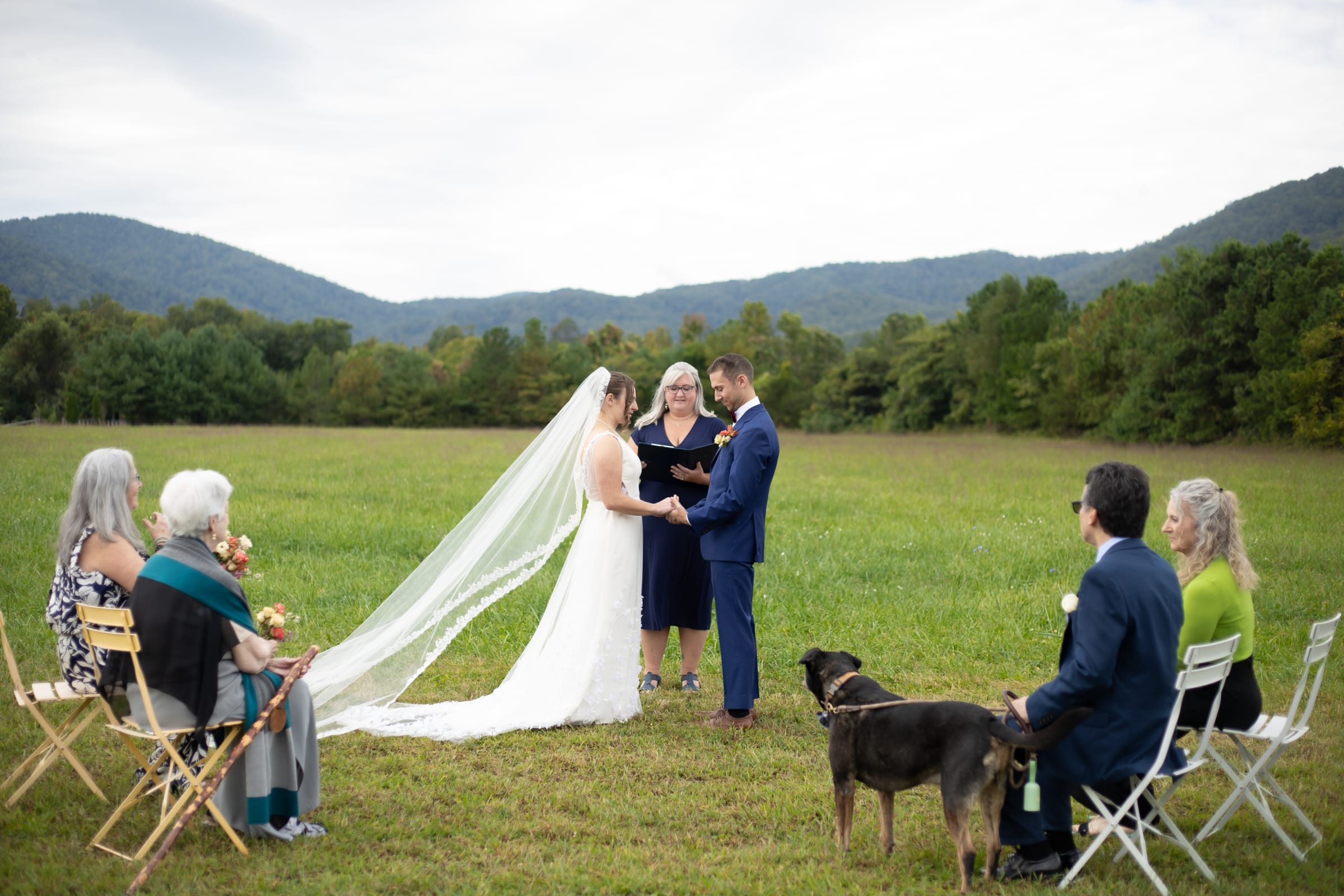
Hiring a professional is the most straightforward path. A good officiant handles the legal paperwork, customizes the ceremony to fit your story, and knows how to hold space for a meaningful moment even with a small or nonexistent audience. For remote elopements, this is often the smoothest option — they’ve done it before and won’t be thrown by a mountaintop ceremony or a waterfall backdrop.
Two officiants who specialize in exactly the kind of intimate, personal ceremonies elopement couples are looking for:
Jennifer I Do (Jennifer Rueda Warnecki) is based in Northern Virginia and is licensed to officiate throughout Virginia, Maryland, and DC. She specializes in elopements, bilingual ceremonies (English and Spanish), LGBTQ+ ceremonies, and sunrise ceremonies — and she’s known for taking time to actually learn your story before the day, which shows in how personal the ceremony feels. She travels to Shenandoah National Park and is willing to hike to your ceremony location, which makes her a genuine option for couples planning a more adventurous day. Find her at jenniferidoweddings.com.
Dave Norris is a former Mayor of Charlottesville and one of the most experienced and warmly reviewed officiants in Central Virginia. He specializes in civil ceremonies that can be fully customized — non-religious by default, but will incorporate religious elements on request. He travels to Shenandoah National Park and is happy to hike in to wherever your ceremony is happening, which is exactly what you want in an officiant for a mountain elopement. He’s based in Charlottesville, making him a natural fit for the south end of Shenandoah, the Blue Ridge Parkway, and the Afton/Waynesboro region. Find him at letdavemarryyou.com.
One thing worth knowing: officiants who travel to remote or elevated locations — deep in Shenandoah, Grayson Highlands, or along the Blue Ridge Parkway — typically charge travel fees on top of their base rate. Factor this into your budget early, and ask about it directly when you reach out.
Option 2: Have a friend officiate
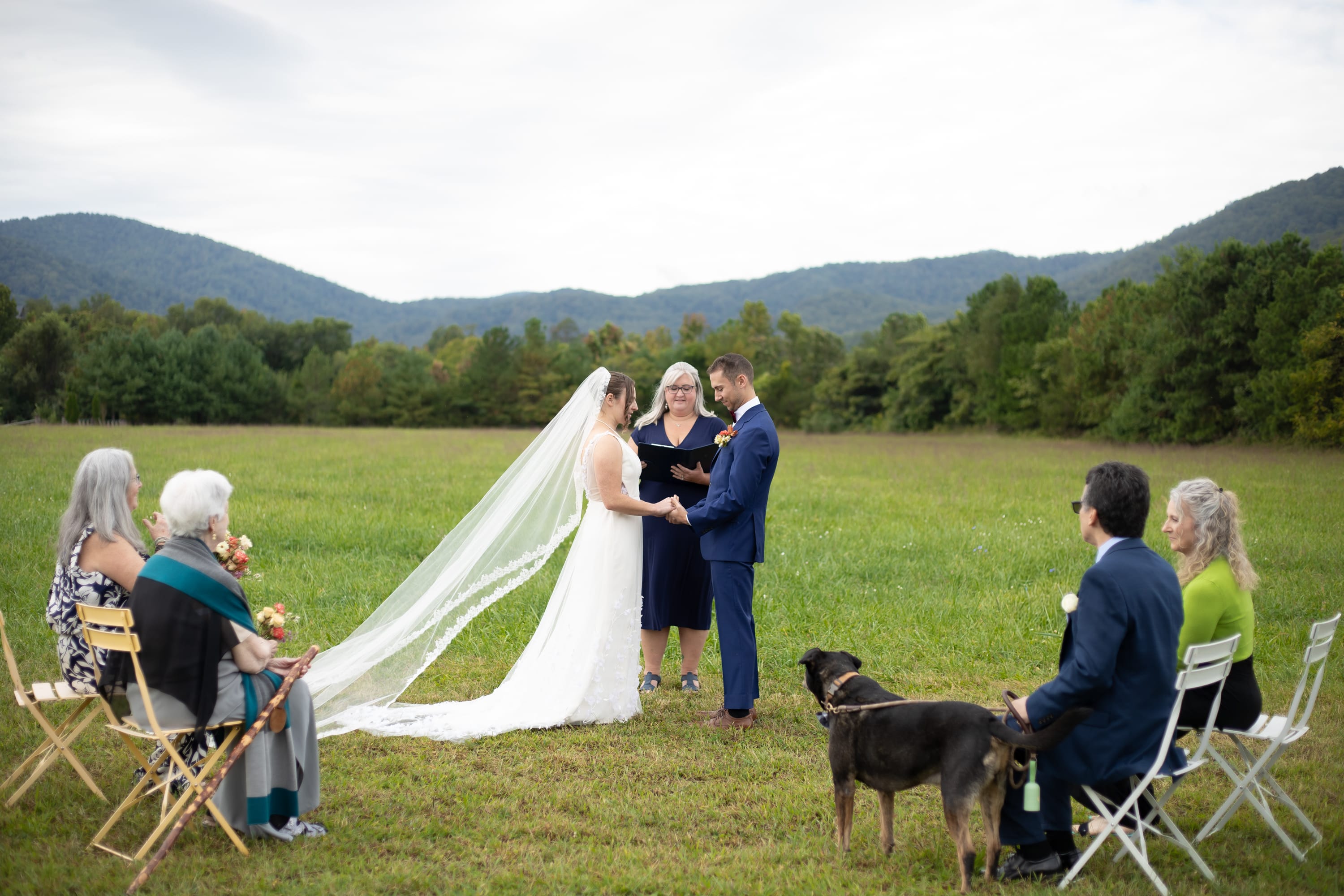
Having a close friend or family member officiate your elopement is meaningful, affordable, and works beautifully when done right. In Virginia, a friend can legally officiate your wedding by getting ordained online through the Universal Life Church (ULC) or a similar organization. The process takes about five minutes and the ordination is valid statewide in most cases.
One important exception: Augusta County.
In late 2024, the Augusta County Circuit Court Clerk’s office made it official: they do not recognize ULC ordinations or online ordinations from similar organizations. The ULC filed a federal lawsuit challenging this in 2025, but as of early 2026 the suit was dismissed. The issue is still being contested, but for now the policy stands.
Augusta County covers a significant stretch of Virginia — including areas near the southern Shenandoah entrance, Waynesboro, and Staunton. If you’re applying for your marriage license through any of these clerks’ offices, a ULC-ordained friend cannot legally sign off on your marriage certificate.
The rule of thumb: Before counting on a friend to officiate, call the specific circuit court clerk’s office where you plan to apply for your marriage license and ask directly whether they recognize ordinations from the organization your friend used. This takes ten minutes and can save you a significant headache.
Option 3: Courthouse ceremony + adventure elopement day
This is an option more couples should consider, and one that a number of my couples have done.
The idea is simple: get legally married at the courthouse — just the two of you, a clerk, five minutes — and then spend your elopement day doing exactly what you actually want to do. Hike to a summit in Shenandoah. Explore a wildflower meadow at Grayson Highlands. Wander a charming downtown. Whatever feels like you.
The practical advantages are real. Courthouse ceremonies are inexpensive — usually just a small filing fee. You don’t have to coordinate an officiant’s travel or schedule to a remote location. And you get complete flexibility on where and how you spend your elopement day, without the timing pressure of having a ceremony that needs to happen in a specific place at a specific time.
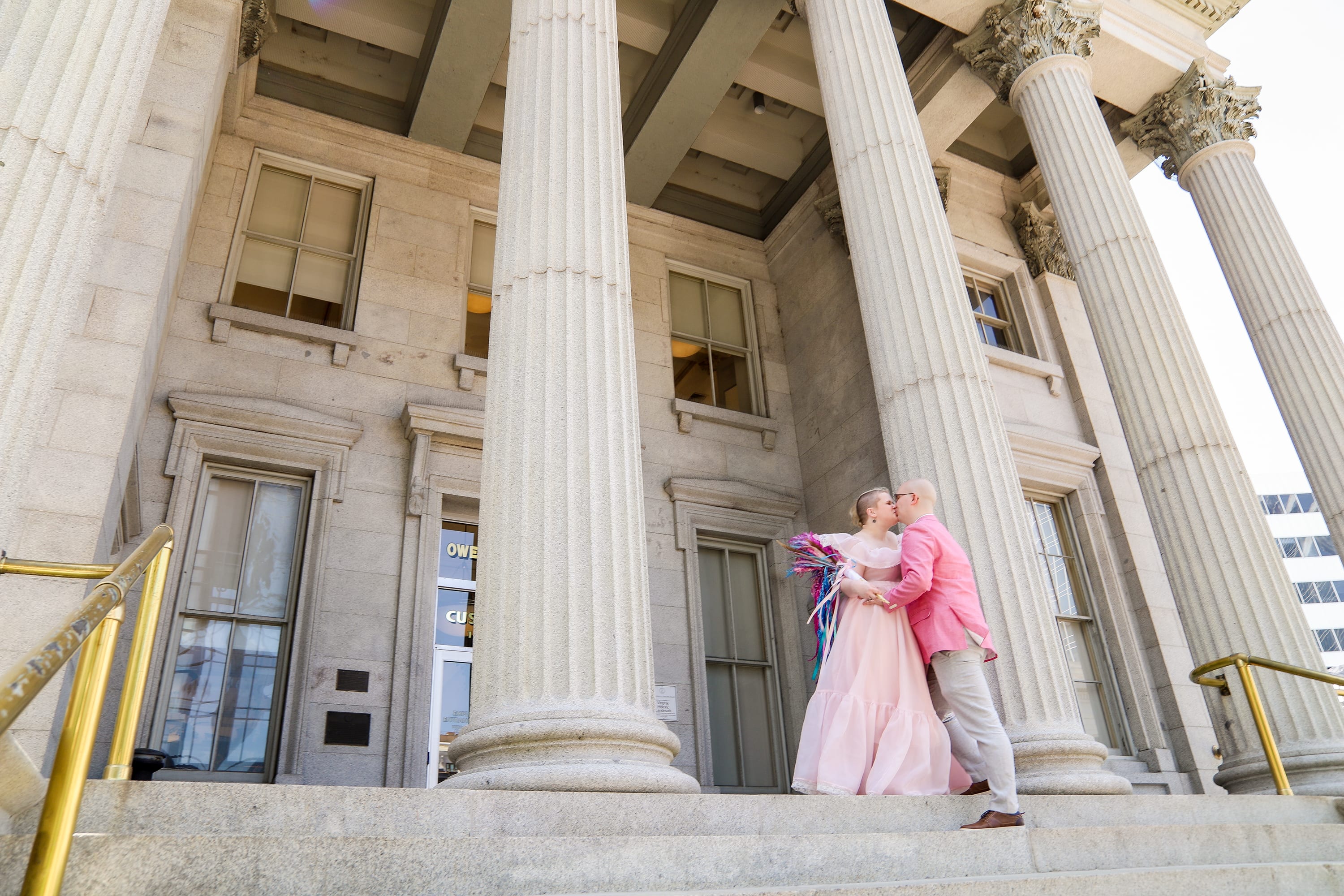
What surprises couples: courthouse ceremonies photograph beautifully. The historic architecture, the formality of the moment, the intimacy of it being just the two of you — it reads really well in photos. And because you’re at the courthouse and then out in nature, you have the option of two completely different looks. A lot of couples lean into that.
The elopement day after the courthouse is still real. The moments still happen. I’ve documented some of my favorite elopement days this way.
Option 4: Get legally married in your home state, elope in Virginia
Some couples want to simplify the legal side entirely and focus the Virginia trip on the experience. Getting legally married in your home state — at your local courthouse, with a small ceremony, whatever works — and then coming to Virginia for your elopement adventure is a completely valid approach.
This works especially well for destination couples coming from out of state. You handle the paperwork at home, where you know the process and the logistics. Then you show up in Virginia and your entire focus is on the day itself.
Shenandoah National Park and Grayson Highlands State Park are two locations that draw couples specifically for this kind of trip. Grayson in particular — the wild ponies, the grassy balds, the sense of being at the edge of the world — is the kind of place that couples travel to from across the country. If you’re already making the trip, getting the legal piece handled beforehand just removes a variable.
The experience is just as real. The photography is the same. The day is still yours.
What I’d tell every couple
The legal piece of an elopement is important and worth getting right, but it doesn’t have to be the hard part. Most of the couples I work with figure out the officiant question in an afternoon once they know the options.
If you’re still putting together the logistics and want a second set of eyes on your plan — including the officiant piece — reach out here. It’s the kind of question I help couples think through regularly.
Frequently Asked Questions
Can a friend legally officiate my Virginia elopement? +
Yes — in Virginia, a friend can officiate your wedding if they're ordained through an online organization like the Universal Life Church. However, some county circuit court clerks have stopped recognizing ULC ordinations. Augusta County is a confirmed example as of 2024. Always verify with the specific clerk's office where you're applying for your marriage license before counting on a friend officiating.
Do we have to get legally married where we have our elopement ceremony? +
No. Virginia couples have two options: get legally married at the courthouse and then have a full adventure elopement day separately, or get legally married in your home state and come to Virginia purely for the elopement experience. Both are valid, both can be photographed beautifully, and both are options my couples use regularly.
How much does an officiant cost for a Virginia elopement? +
It varies significantly by location and travel involved. Officiants who travel to remote locations like Shenandoah National Park or Grayson Highlands typically charge more than those performing ceremonies near their home base. Budget $200–600+ for a professional officiant depending on the location, ceremony length, and customization. Courthouse ceremonies are often $25–75 in filing fees only.
Can we elope in Shenandoah National Park if we're already legally married? +
Yes — and this is an option more couples should know about. If you're already legally married (courthouse ceremony or married in your home state), you don't need a legal ceremony in the park. You can have a vow exchange, a meaningful moment, or just a full day of portraits celebrating your relationship. No permit is required for photography, and the experience is just as real and just as worth documenting.