 Alysa Segovia
Elopement Vows: A Real Guide to Writing What You Mean
A guide to writing elopement vows — how long they should be, what to actually say, and why private vows at an elopement can be more honest than anything written for an audience.
Somewhere along the way, wedding vows became a performance. Written to be heard by a room, polished until they sound like everyone else’s, read off a phone with one eye on two hundred people watching.
An elopement changes that. There’s no room to perform for. It’s just the two of you — which means your vows can finally just be true.
Why elopement vows are different
At a traditional wedding, vows are written with an audience in mind, whether you mean to or not. You soften the specific details. You cut the inside joke no one else will get. You reach for language that sounds appropriately “wedding.”
At an elopement, none of that pressure exists. No one’s going to overhear the line that’s just for the two of you. That changes what you’re willing to write — and it’s usually the difference between vows that sound like a wedding and vows that sound like your actual relationship.
A few spots left for winter 2026 — fall 2027 dates are filling fast.
How to actually start writing them
Start with a memory, not a promise. “I promise to always…” is where most people start, and it’s usually where they get stuck. Start instead with something true that already happened — the moment you knew, a specific Tuesday, the thing they did that you’ve never told them mattered. The promises will follow naturally once you’re writing from something real instead of an abstraction.
Write down specific details before you write a single sentence. Inside jokes. Small habits. The way they make coffee. The thing they said on your third date. A list of ten true, specific details will do more work than an hour of trying to write “beautiful” sentences. Specificity is what makes vows feel like they could only be about this one person.
Say the hard thing, not just the easy thing. The vows that land hardest usually include something a little vulnerable — a fear you’re trusting them with, a way they’ve changed you, an apology for something small. Easy, pretty language is forgettable. True is not.
Read it out loud before the day. Vows that look good on paper sometimes don’t sound like you out loud. Read them to yourself, alone, before you’re standing in front of your partner. If a sentence feels stiff or not like something you’d actually say, consider cutting it.
A simple structure, if you want one
You don’t need to follow this, but if you’re staring at a blank page, here’s a shape that works. And above all — if something here doesn’t fit, skip it. Whatever makes you feel most comfortable and most like yourself is the right choice, every time.
Open with something specific. A memory, a moment, a detail only the two of you would know.
Talk about where you’ve been. Not every relationship is a straight line, and your vows don’t need to pretend yours was. Whatever you’ve been through together — the hard seasons, the distance, the moments that tested you — that history is part of the vow too. Say how it made you stronger, not just that you survived it.
Say what they’ve changed in you. Not generically — specifically. What’s different about you because of them?
Make one or two real promises. Not “I promise to love you forever” — something closer to how you actually show love. “I promise to always save you the last bite.” “I promise to let you pick the music on long drives.” Specific promises are the ones you’ll actually remember making.
Close with something true about right now. Where you are, what this moment feels like, why today.
How long should they be?
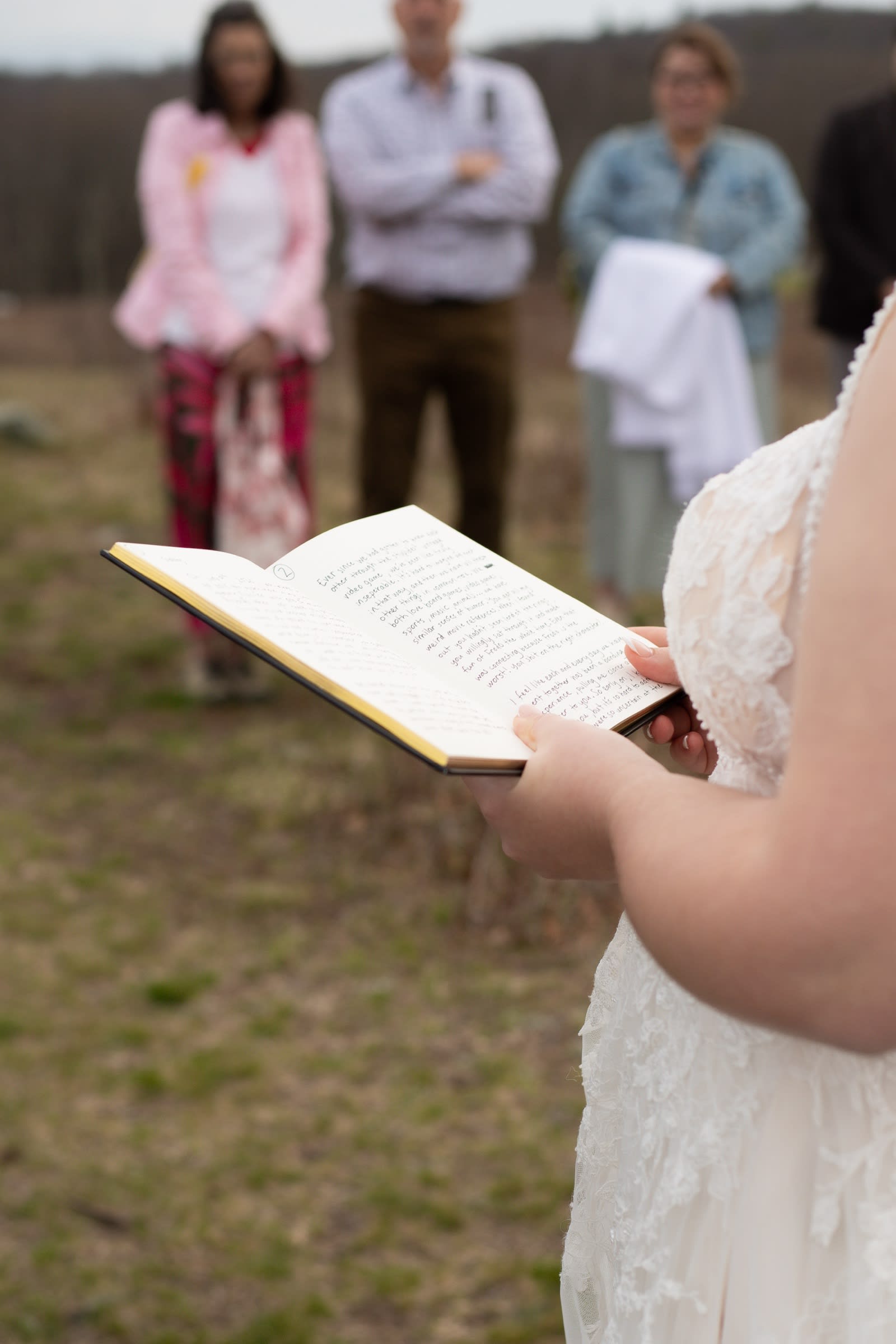
Long enough to actually say what you mean. Three to four minutes read aloud is a good target — that’s usually 500 to 600 words. Give yourself room to include the memory, the history, the promises — all of it deserves more than a line or two.
Reading them vs. memorizing them
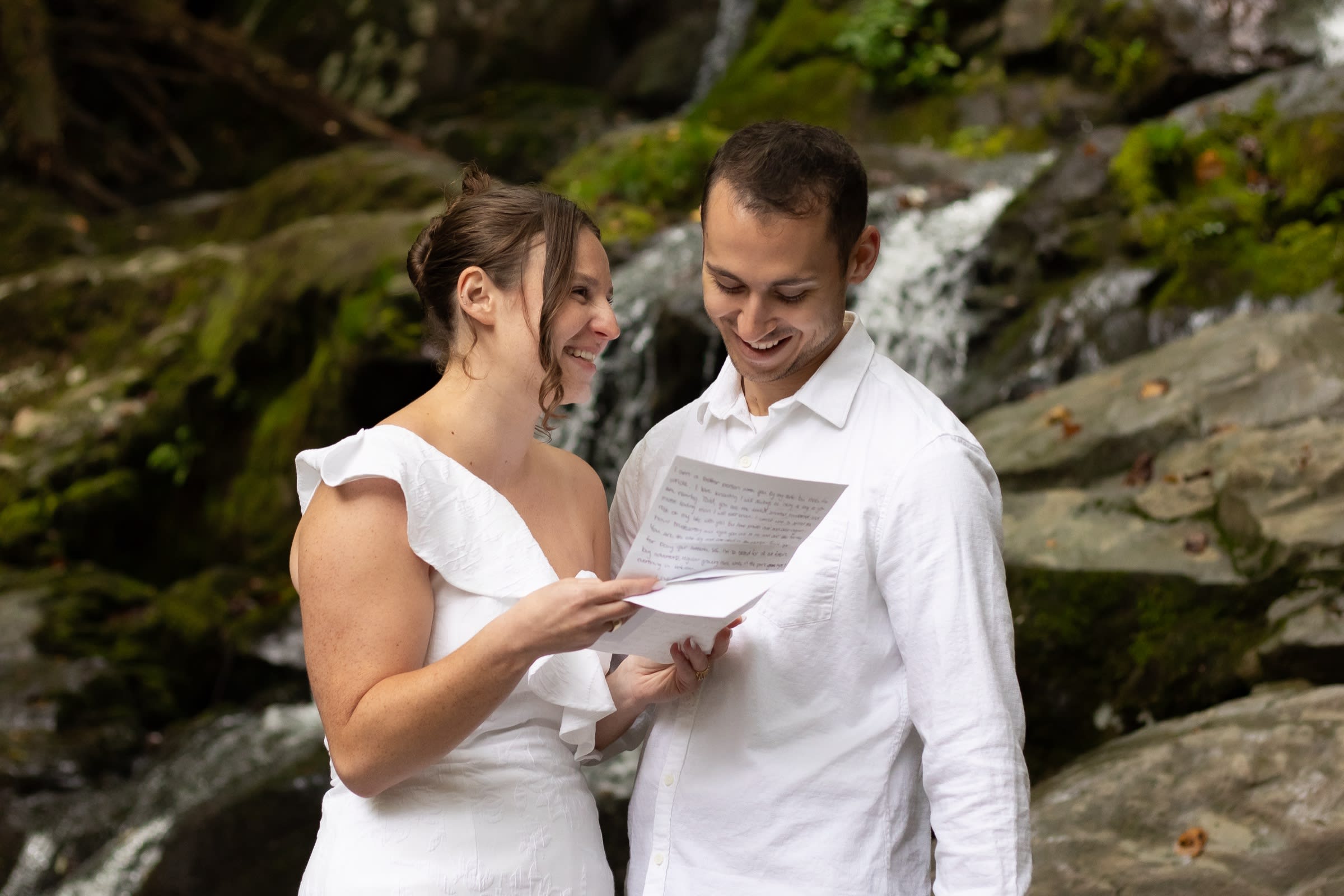
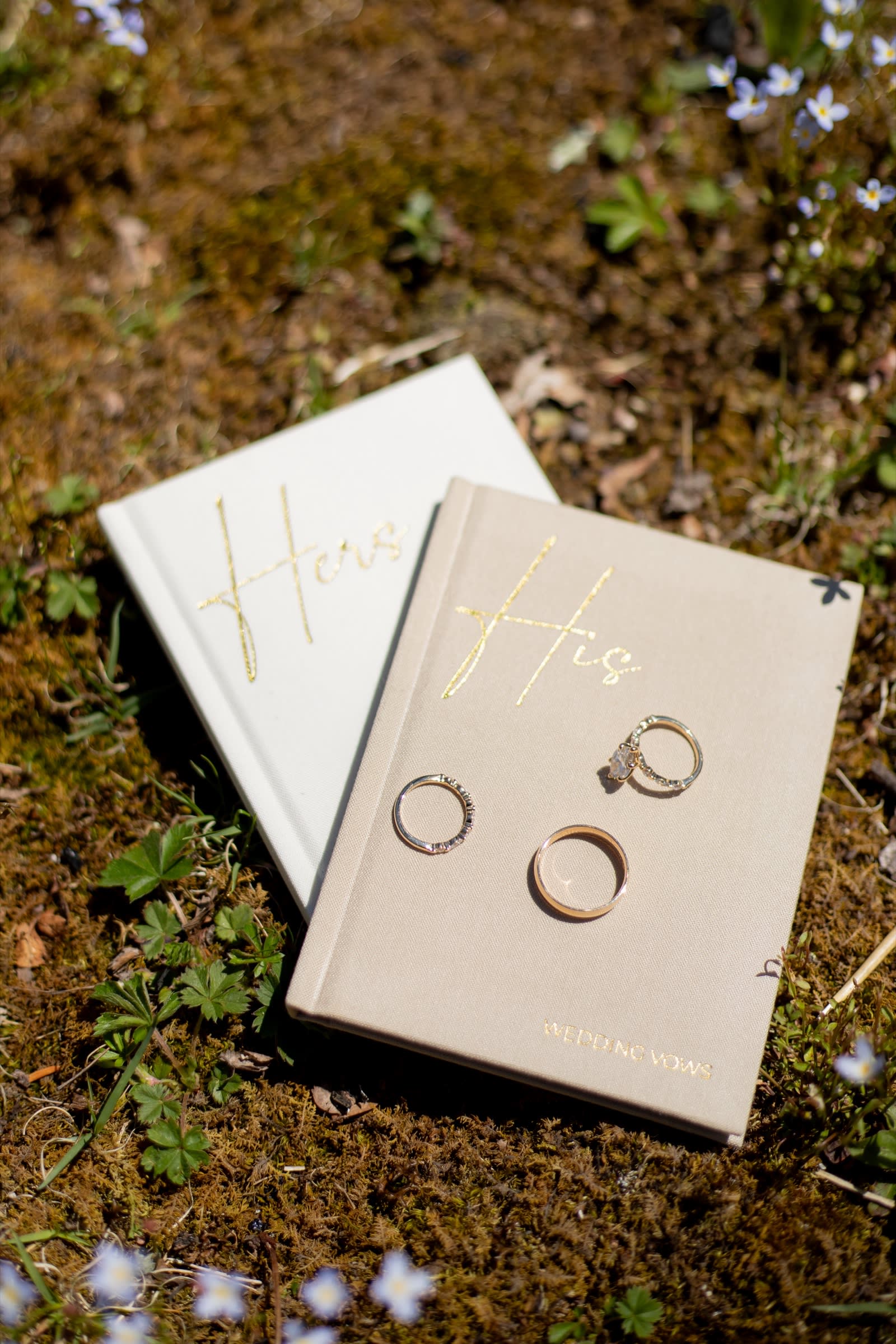
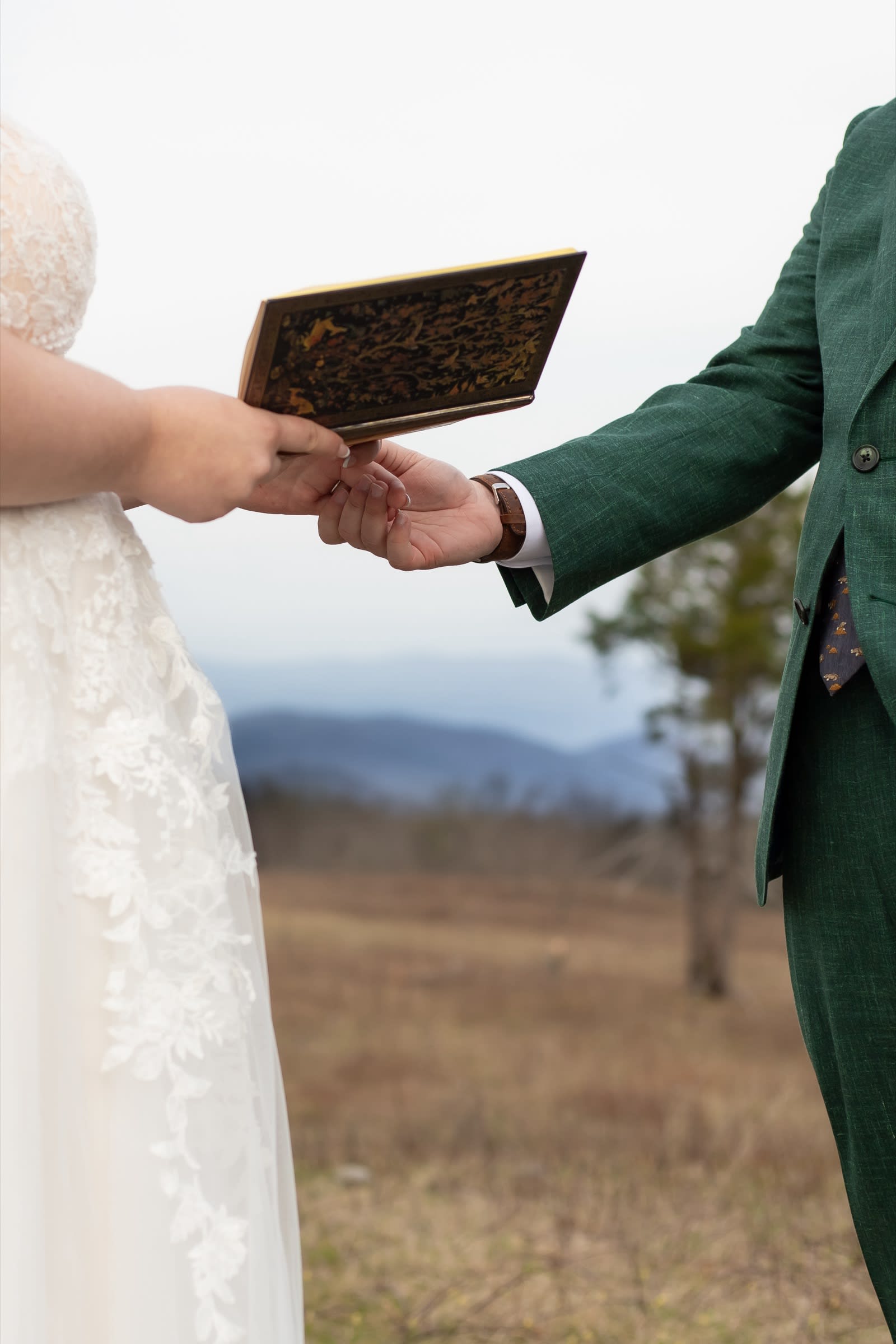
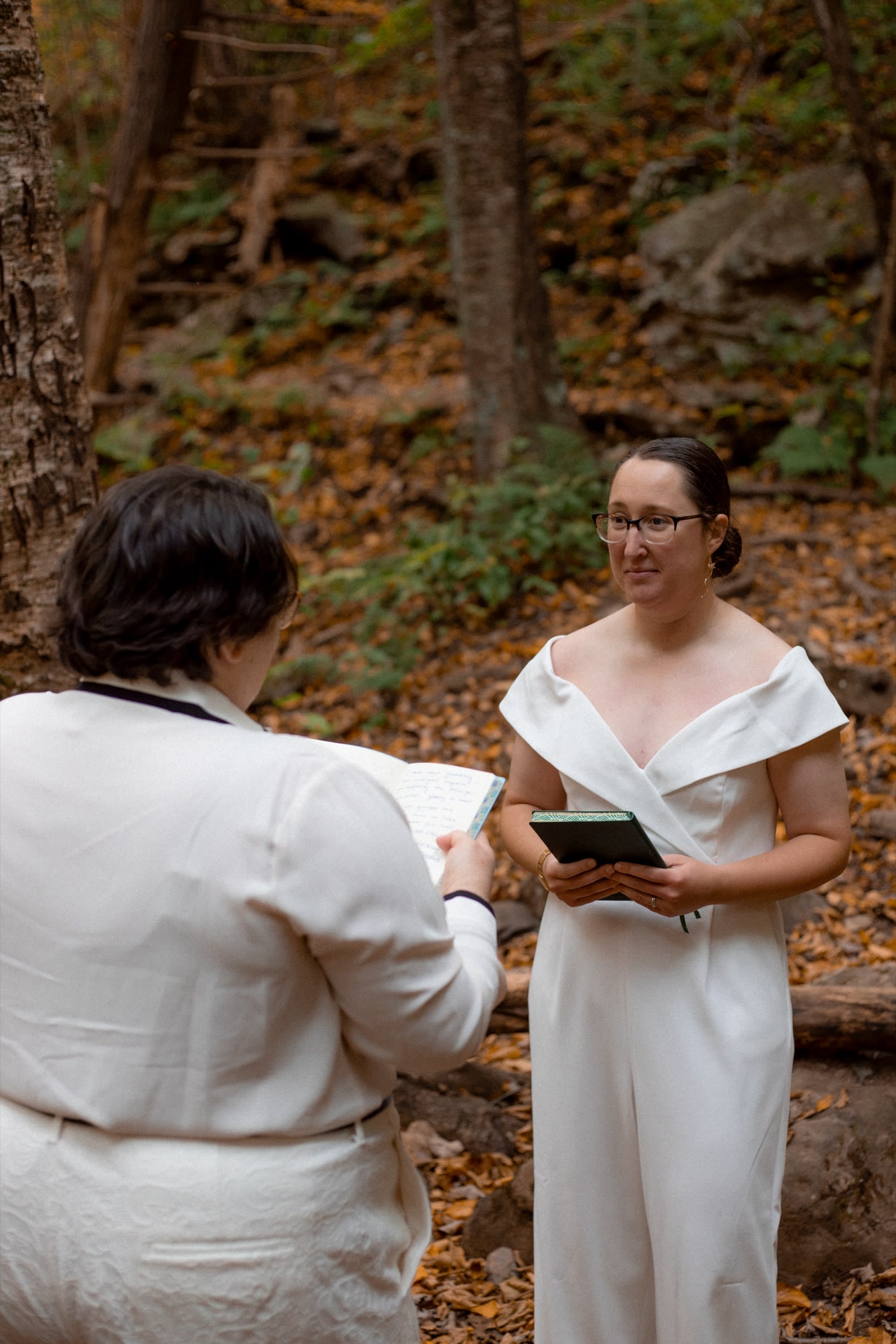
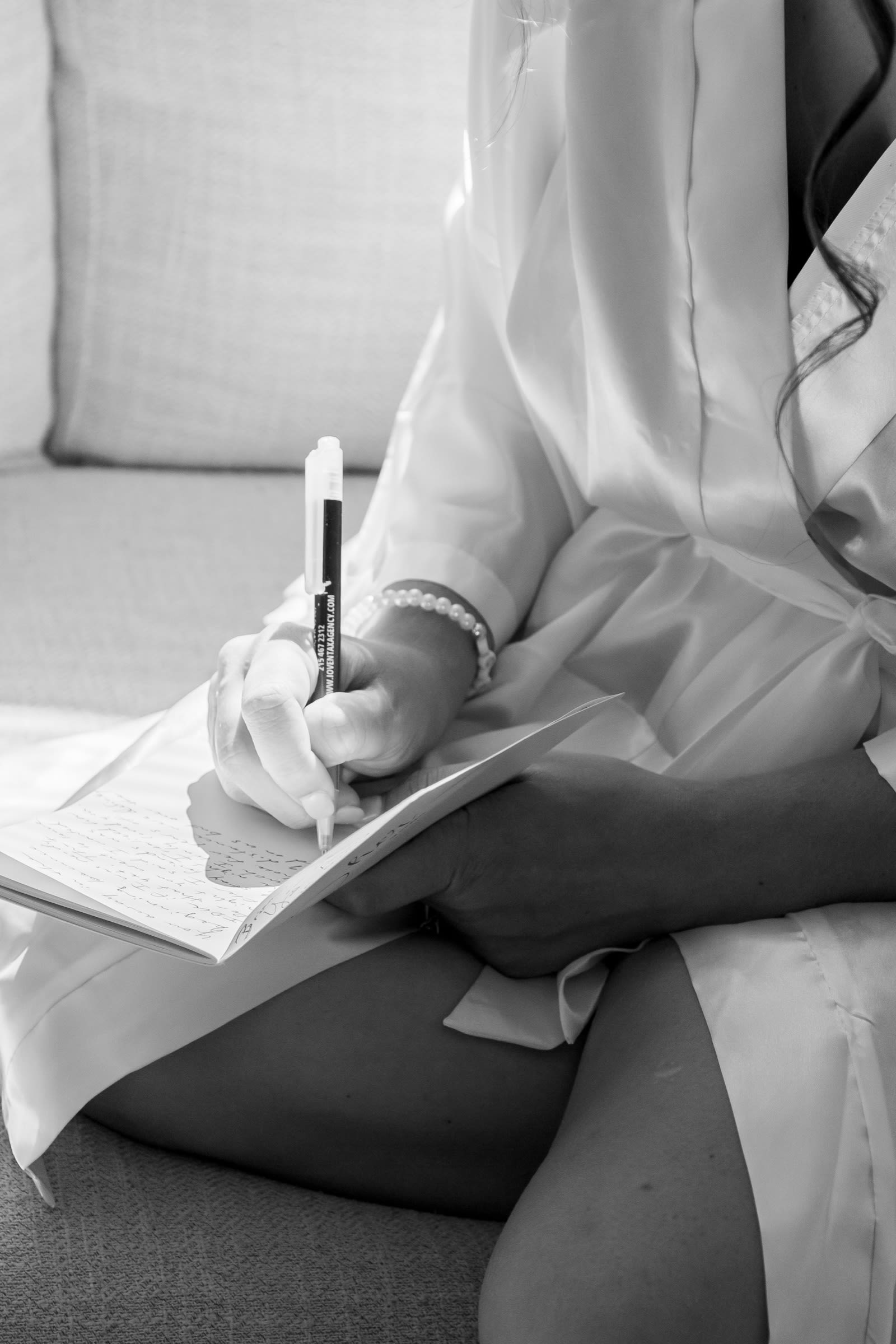
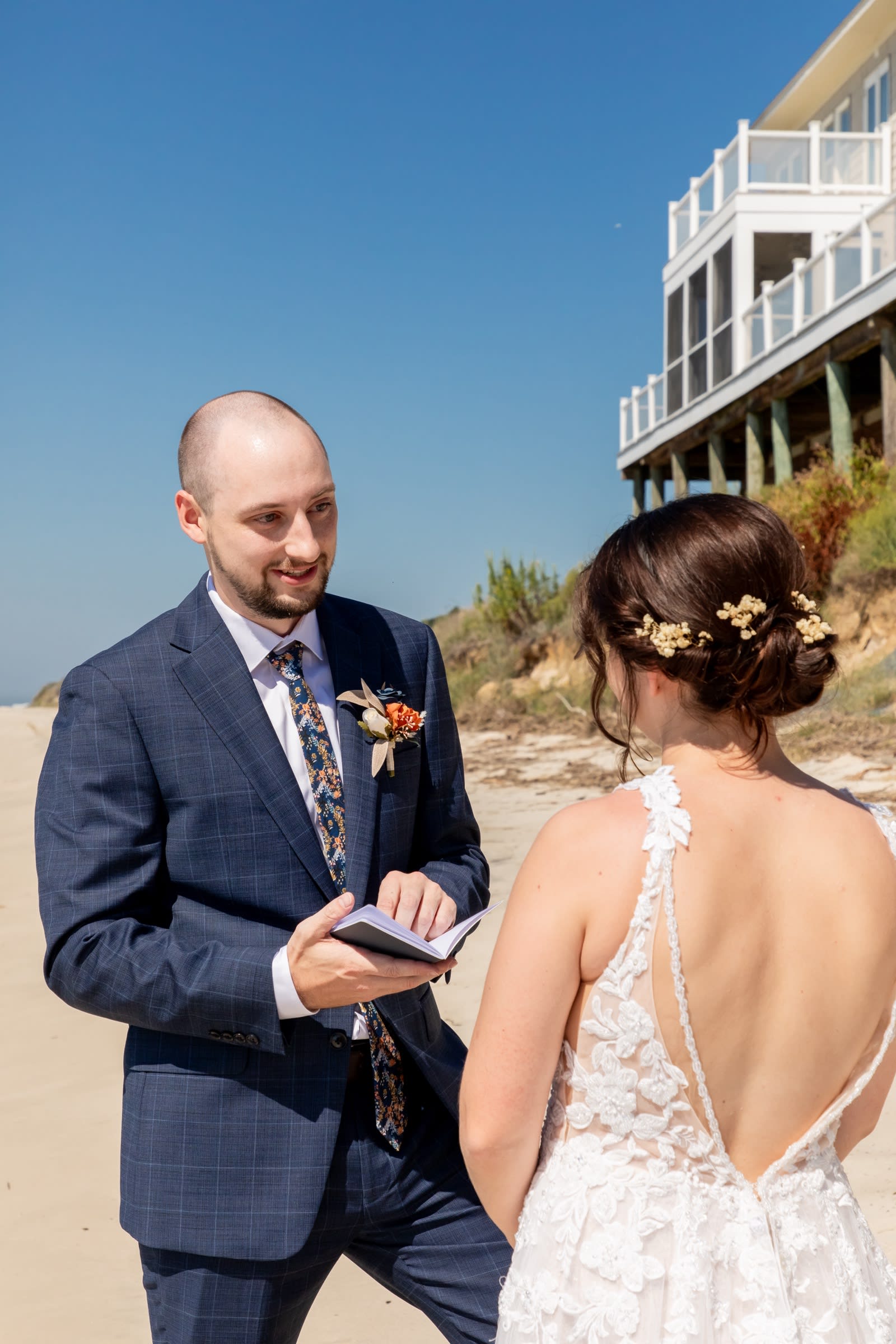
Write them down — don’t read from your phone. A notebook, a card, even a nice sheet of paper, but not a screen. Memorizing adds a layer of performance anxiety that has nothing to do with what you’re actually trying to say, and a phone pulls you both out of the moment in a way a page never does. Reading from something written lets you stay present with your partner instead of mentally reciting. It’s also worth knowing: vows written out by hand make for genuinely beautiful detail photos — the paper, the handwriting, the small imperfections are part of the story of your day.
Should you hear them beforehand?
I’d recommend not reading them to each other ahead of time. Hearing your vows for the first time in the moment is what makes them hit the way they’re supposed to — once you’ve already heard the words, a lot of that raw emotion is gone by the time you’re standing there saying them. Save it. Let the first time be the real time.
If you’re not a writer
You don’t need to be. I say this to almost every couple I work with: the vows that land hardest are rarely the most polished ones. They’re the most real ones. A true, small detail — the way they laugh at their own jokes before they finish telling them, the Tuesday you knew — will always carry more weight than a beautifully written sentence that could technically apply to anyone.
If you’re stuck, don’t start by trying to write well. Start by writing down ten true things. The vows will follow.
I’d love to help you plan the rest of the day around that moment.
Reach outA few spots left for winter 2026 — fall 2027 dates are filling fast.
Guide written by Alysa Segovia — a Virginia elopement photographer who has photographed hundreds of private vow exchanges across Shenandoah National Park and the Blue Ridge Parkway.
More elopement planning guides
Frequently Asked Questions
How long should elopement vows be?
Three to four minutes per person read aloud is a good target — enough room to include a real memory, your history together, and genuine promises. Written out, that's usually somewhere between 500 and 600 words.
Is it okay to read our vows instead of memorizing them?
Yes — and it's what I'd recommend. Write them down on a card, in a notebook, or on a nice sheet of paper. Just not your phone. Memorizing adds pressure that has nothing to do with the words themselves, and reading from something written (rather than a screen) keeps you present with your partner. Vows written out by hand also make for beautiful detail photos.
Should we hear each other's vows before the ceremony?
I'd recommend not reading them to each other beforehand. Hearing your vows for the first time in the moment is part of what makes them land the way they're supposed to — once you've already heard the words, some of that raw emotion is gone by the time you're standing there saying them.
What if I'm not a writer?
You don't need to be. The vows that land hardest are rarely the most polished ones — they're the most real ones. A true detail will always outperform a beautiful sentence that could apply to anyone.